The Perfect Trap: How American Company Towns Mastered the Science of Voluntary Servitude
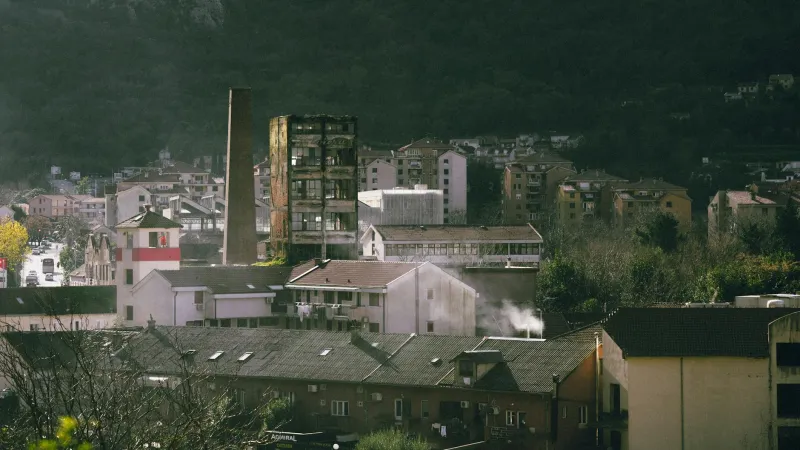
In 1880, railroad car magnate George Pullman unveiled his masterpiece: a complete town built around his manufacturing plant south of Chicago. Pullman, Illinois, featured tree-lined streets, a library, schools, parks, and company-owned housing that was genuinely superior to most urban alternatives. Workers flocked to this industrial paradise, grateful for clean air, stable employment, and a community that seemed to care about their welfare.
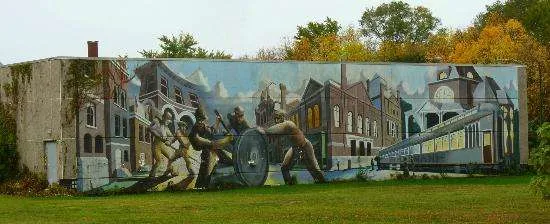 Photo: Pullman, Illinois, via dottie.enjoyillinois.com
 Photo: George Pullman, via res.cloudinary.com
What they discovered too late was that Pullman had solved an ancient problem: how to create voluntary slavery that felt like freedom.
The Architecture of Dependence
Company towns weren't accidents of industrial development—they were carefully engineered systems for controlling human behavior through manufactured dependence. From the coal camps of West Virginia to the lumber towns of the Pacific Northwest, American corporations spent the late 19th and early 20th centuries perfecting techniques for total social control that would have impressed any medieval lord.
The genius lay in understanding what people actually wanted. Workers didn't just need jobs; they needed homes, schools for their children, places to shop, and communities where they belonged. Company towns provided all of these things, but with a crucial modification: every element of daily life flowed through a single source that could be withdrawn at will.
In Pullman's town, workers rented company houses, shopped at company stores, sent their children to company schools, and borrowed books from the company library. The company even owned the church. When workers complained about rent increases or wage cuts, they weren't just risking their jobs—they were risking their entire world.
The Psychology of Grateful Dependence
The most sophisticated company towns understood that successful control required genuine gratitude. Unlike the crude coercion of earlier industrial systems, these communities offered real improvements in living standards that made workers feel lucky to be there.
Lowell, Massachusetts, recruited young women from New England farms with promises of education, culture, and independence. The textile mills provided dormitories, libraries, and even literary magazines written by the workers themselves. For rural women with limited options, Lowell represented genuine opportunity and advancement.
But the system's brilliance lay in its gradual revelation of limits. Workers discovered that their independence was conditional, their opportunities circumscribed, and their gratitude expected to be permanent. The company that provided everything could take everything away, and workers who had tasted a better life were far more compliant than those who had never known anything else.
The Economics of Total Control
Company towns solved a fundamental problem of industrial capitalism: how to maintain a stable workforce in an economy built on individual mobility. By controlling housing, credit, and social life, corporations could prevent workers from accumulating the independence necessary to leave or organize.
The company store system perfected this control. Workers were paid in company scrip that could only be spent at company establishments, creating a closed economic loop that prevented wealth accumulation. Prices were set to ensure that workers never quite broke even, creating permanent debt that functioned as invisible chains.
U.S. Steel's Gary, Indiana, represented the pinnacle of this system. The corporation built an entire city, complete with ethnic neighborhoods designed to prevent worker solidarity, company-controlled municipal government, and social institutions that reinforced corporate values. Workers lived in a company-created world so complete that resistance seemed not just futile but ungrateful.
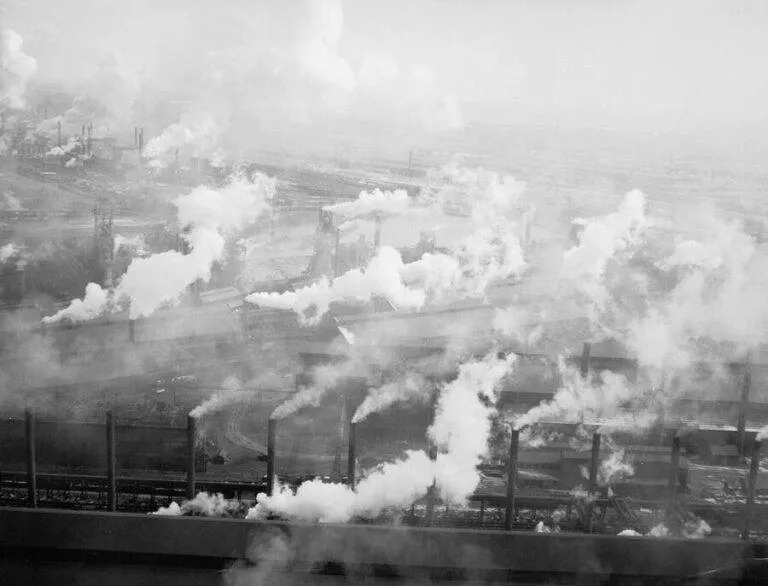 Photo: Gary, Indiana, via allthatsinteresting.com
The Illusion of Community
The most insidious aspect of company towns was how they satisfied genuine human needs for belonging and community while channeling those needs toward corporate ends. Company picnics, sports leagues, and social clubs created real bonds between workers while ensuring that all social organization served company interests.
These weren't fake communities—they were real communities with artificial constraints. Workers formed genuine friendships, raised families, and created shared cultures within company towns. But they did so under conditions that made collective action against the company feel like betrayal of neighbors and destruction of home.
The company town thus solved what political scientists call the "collective action problem"—the difficulty of organizing individual workers into effective groups. By making workers dependent on the company for community itself, corporations ensured that any challenge to company authority threatened the very social bonds that made life bearable.
The Inevitable Rebellion
The Pullman Strike of 1894 revealed both the power and the weakness of the company town system. When economic depression forced wage cuts while rents remained high, workers discovered that their model community was actually a sophisticated trap. Their gratitude turned to rage not because conditions were objectively terrible, but because the gap between promise and reality became impossible to ignore.
The strike's violence and ultimate suppression by federal troops demonstrated that company towns could maintain control only as long as workers believed in the system's basic fairness. Once that belief collapsed, the very dependence that had ensured compliance became a source of revolutionary fury.
The Legacy of Manufactured Dependence
Company towns largely disappeared by mid-century, killed by labor laws, Social Security, and economic changes that gave workers alternatives. But their techniques for creating voluntary dependence through manufactured community persist in forms both obvious and subtle.
Modern corporations still understand that controlling where people live, work, and socialize provides leverage that pure employment relationships cannot. From tech companies that provide meals, transportation, and social activities to retail chains that dominate small-town economies, the company town's essential insight—that dependence disguised as care is the most effective form of control—remains as relevant as ever.
The Eternal Laboratory of Human Nature
The rise and fall of American company towns provides a controlled experiment in human psychology that spans generations. These communities demonstrated that people will voluntarily surrender freedom for security, independence for belonging, and autonomy for care—as long as the trade feels fair and the alternatives seem worse.
The lesson isn't that workers were naive or corporations were uniquely evil. It's that human beings are social creatures who need community to thrive, and that need can be satisfied in ways that serve power or challenge it. Company towns succeeded because they offered genuine community and real improvements in material conditions. They failed because they tried to make those improvements permanent justifications for permanent subordination.
In our current economy of gig work and corporate campuses, the company town's insights into human nature remain disturbingly relevant. The desire for security, community, and care hasn't disappeared—it's simply waiting for the next system clever enough to provide them at a price most people won't recognize until they try to leave.