Seven Ghost Towns That Prove the Boom Was Never Going to Last
Seven Ghost Towns That Prove the Boom Was Never Going to Last
There is a particular kind of American optimism that is indistinguishable, at close range, from delusion. It is the conviction that the current boom is structurally different from every previous boom—that the silver vein runs deeper this time, that the land value can only increase, that the oil field will produce for generations. This conviction has been held, with equal sincerity, by every wave of settlers who built a city in six months and abandoned it in three years. The ghost towns they left behind are among the most honest places in the United States. They do not argue. They simply stand there.
History is the only lab that never closes, and these seven locations are some of its most precisely controlled experiments. Each one tested the same hypothesis—that a single resource could anchor a permanent community—and each one returned the same result.
1. Bodie, California — The Gold That Ran Out on Schedule
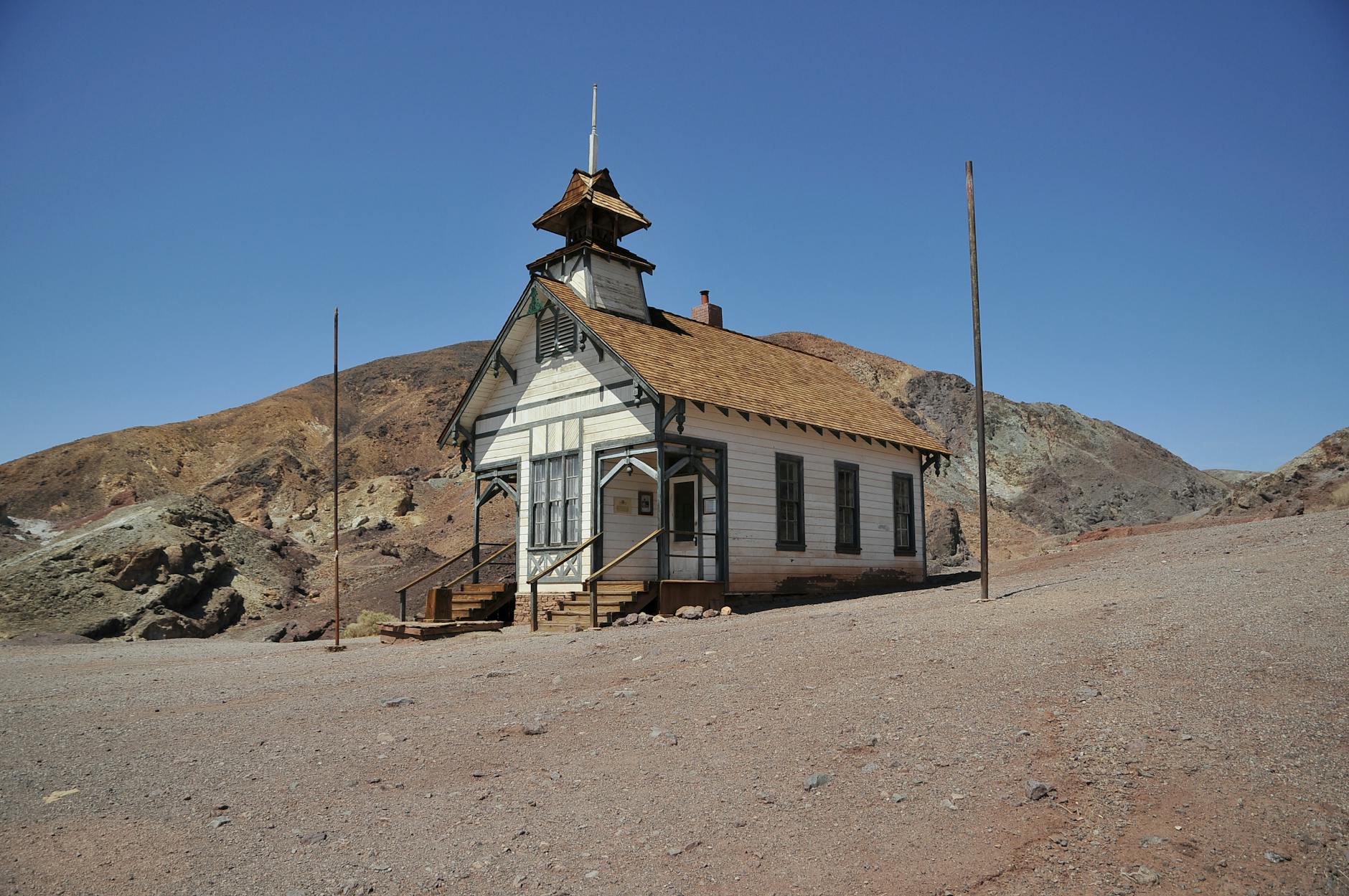
Bodie sits in the high desert of eastern California, preserved by the state in a condition the park service calls "arrested decay"—which is a precise and somewhat melancholy phrase for what happens when you stop a thing from falling apart without actually repairing it. At its peak in 1879, Bodie had a population of approximately 10,000 people, 65 saloons, and a reputation for violence that was apparently well-earned. The gold and silver that produced all of this lasted roughly a decade at serious yield before the economics turned.
What makes Bodie instructive is not the collapse but the acceleration of the construction. Buildings went up faster than they could be properly supplied. The infrastructure of a functioning city—hotels, newspapers, a red-light district, a stock exchange—materialized almost instantaneously around a resource that geologists at the time had limited ability to assess with any reliability. The certainty was social before it was economic. People built because other people were building.
Visiting: Bodie State Historic Park is accessible via a partially unpaved road off US-395, roughly 13 miles from Bridgeport. The park is open year-round, though winter access is limited by snowpack.
2. Rhyolite, Nevada — When the Bank Builds Before the Mine Proves Out
Rhyolite, located in Nye County near the entrance to Death Valley, contains what is perhaps the most emblematic single structure in the American ghost town canon: the ruins of the Cook Bank Building, a three-story Neoclassical edifice completed in 1908 that would not look out of place in a prosperous Midwestern county seat. It was built on the expectation that the surrounding gold mines would produce for decades. They produced for approximately three years at meaningful yield.
The bank building is the key detail. A saloon or a boarding house can be thrown up in anticipation of immediate revenue. A three-story bank constructed from imported materials is a statement of permanent institutional confidence. Rhyolite attracted that level of investment—at its height, it had a population estimated between 3,500 and 10,000—and then lost it with a speed that the physical evidence still struggles to communicate. By 1920, the town was essentially empty.
Visiting: Rhyolite is accessible via State Route 374, just outside the Death Valley National Park boundary. The ruins are on Bureau of Land Management property and are free to visit.
3. Centralia, Pennsylvania — The Resource That Refused to Run Out
Centralia inverts the standard ghost town narrative in a way that makes it more unsettling, not less. The coal beneath Centralia did not run out. It caught fire in 1962—the precise origin is disputed, but a landfill burn that ignited a coal seam is the leading theory—and it has been burning ever since. The town was not abandoned because the boom ended. It was abandoned because the boom became uninhabitable.
At its peak, Centralia was a functional Pennsylvania mining community of over 1,000 residents. Today, the population is in the single digits. The streets remain mapped and partially paved, leading to empty lots where houses once stood. Sinkholes open without warning. Carbon monoxide vents from cracks in the earth. The Pennsylvania government condemned and bought out most properties through eminent domain in the 1980s.
Centralia is a ghost town created not by economic exhaustion but by physical consequence—which is arguably the more honest version of the same story.
Visiting: Centralia is located in Columbia County off PA-61. The infamous graffiti highway (Odd Fellows Road) has been repaved and blocked, but the surrounding streets and the hilltop Orthodox church remain accessible.
4. Cahawba, Alabama — The Political Capital That Got Outmaneuvered
Not every boom is extractive in the mineral sense. Cahawba was Alabama's first permanent state capital, established in 1820 at the confluence of the Cahaba and Alabama rivers. It had every advantage that early nineteenth-century urban planners understood: water access, central location, political significance. It had one catastrophic vulnerability: it flooded, repeatedly and severely, and the political will to relocate the capital eventually overcame the political will to defend it.
By 1826, the capital had moved to Tuscaloosa. Cahawba lingered for decades as a river town, experienced a brief revival as a cotton-shipping center before the Civil War, and then declined into near-total abandonment by the early twentieth century. The psychological pattern here is slightly different from the mineral boomtowns but recognizably related: the assumption that a location's advantages were permanent and that its vulnerabilities were manageable.
Visiting: Old Cahawba Archaeological Park is operated by the Alabama Historical Commission, located off County Road 9 in Dallas County. The site includes interpretive signage and visible archaeological remains.
5. Eldora, Florida — The Land Rush That Sold Swamp as Suburb
Florida in the 1920s experienced one of the most spectacular real estate collapses in American history, and the landscape is still littered with its evidence. Eldora, on the eastern shore of Lake George in Marion County, represents a quieter version of the same phenomenon—a community that briefly flourished as a tourist and agricultural destination before the combination of a 1926 hurricane, the broader Florida land bust, and eventually the Great Depression reduced it to a handful of structures visible from the river.
The 1920s Florida boom is particularly useful as a psychological case study because the fraud was, in many instances, openly documented at the time. Northern investors were purchasing lots in developments that existed only on maps, in regions that were functionally swampland. The certainty was manufactured by marketing rather than geology, but it was no less total for that. People bought because other people were buying, and because the literature assured them that Florida's growth was permanent.
Visiting: Eldora is accessible by boat on the St. Johns River within the Ocala National Forest. The historic Eldora State House, dating to the 1880s, remains standing and is maintained by the National Park Service.
6. Bannack, Montana — The Town That Wrote the Vigilante Playbook
Bannack was Montana's first territorial capital, established following a gold discovery in 1862. Its history is notable not only for the standard boom-bust arc but for what happened in the social vacuum that rapid, unplanned settlement creates. The town's sheriff, Henry Plummer, was eventually hanged by a vigilante committee on credible suspicion that he was simultaneously leading a gang of road agents responsible for over a hundred murders.
The Bannack story illustrates what happens when the psychological certainty of permanent prosperity meets the institutional absence of a functional state. The town built its economy, its social hierarchies, and its criminal infrastructure simultaneously, because there was no existing framework to separate them. The gold ran low in the 1870s. The population dispersed. What remained was a remarkably intact collection of wooden structures that now constitute Bannack State Park.
Visiting: Bannack State Park is located off Montana Highway 278, approximately 25 miles west of Dillon. The park offers guided tours and hosts an annual Bannack Days living history event.
7. Killdeer, North Dakota (Surrounding Fracking Camps) — The Boom That Just Happened
The Bakken Formation fracking boom of the 2000s and early 2010s produced something new in the American ghost town tradition: abandoned man camps. These were temporary housing facilities—collections of modular units, sometimes called "frackademia" or "man camps"—erected rapidly around western North Dakota drilling sites to house workers who arrived faster than permanent housing could be built. When oil prices collapsed in 2014 and again in 2020, the economics of marginal Bakken wells shifted dramatically. Some camps were dismantled. Others were simply left.
The man camps are the twenty-first century's contribution to a tradition that stretches back to the California Gold Rush. The technology changed. The psychology—the absolute conviction that the resource would justify the infrastructure, that this particular boom had a different underlying structure than every previous boom—did not change at all.
Visiting: The Killdeer area of Dunn County, North Dakota, offers the most visible evidence of the Bakken boom-bust cycle. The landscape includes both active operations and visibly abandoned infrastructure, accessible via state and county roads.
The Pattern That Won't Break
These seven places are separated by geography, era, and the specific resource that animated them. What connects them is a failure of imagination that is not a character flaw but a feature of how human beings assess risk under conditions of social excitement. When everyone around you is building, the act of not building feels like the irrational choice. This was true in 1879 Bodie and in 2008 North Dakota and in every boomtown in between.
The ghost towns are not warnings that went unheeded. They are records of a psychological constant. Visit them not to feel superior to the people who built them, but to recognize the conditions under which you would have built there too.