The Places Where American Democracy Bled: A Tour of Political Violence We Keep Forgetting
The Places Where American Democracy Bled: A Tour of Political Violence We Keep Forgetting
There is a version of American political history that functions as a kind of comfort myth: the idea that the country was, until recently, characterized by vigorous but fundamentally civil disagreement, and that the polarization visible today represents a genuine departure from the national norm. This version of history is wrong, and it is wrong in ways that are directly legible in the landscape. The places where American political conflict turned physically violent, where ideological disagreement produced bloodshed and institutional breakdown, are still there. Most of them can be visited. None of them support the comfort myth.
History is the only lab that never closes, and the question of whether political polarization is a modern disease or a recurring American condition has been tested repeatedly, at specific addresses, with results that have been preserved in stone, bronze, and the public record.
The Senate Floor as a Crime Scene
On May 22, 1856, a South Carolina congressman named Preston Brooks walked onto the floor of the United States Senate and beat Massachusetts Senator Charles Sumner nearly to death with a metal-tipped gutta-percha cane. Sumner had delivered a speech two days earlier called "The Crime Against Kansas," which included a sustained personal attack on Senator Andrew Butler of South Carolina, Brooks's cousin. Brooks decided that the appropriate response was not a rebuttal. It was approximately 30 blows to the head.
Sumner was unable to return to his Senate duties for more than three years. Massachusetts left his seat empty as a deliberate statement. Brooks was censured by the House but not expelled—the vote to expel fell short of the required two-thirds threshold, largely along sectional lines. He resigned, returned to South Carolina, and was immediately reelected by his constituents. Southern newspapers celebrated. Northern newspapers were appalled. The two regions were, at this point, not merely politically opposed but operating within entirely different moral frameworks about what the event meant.
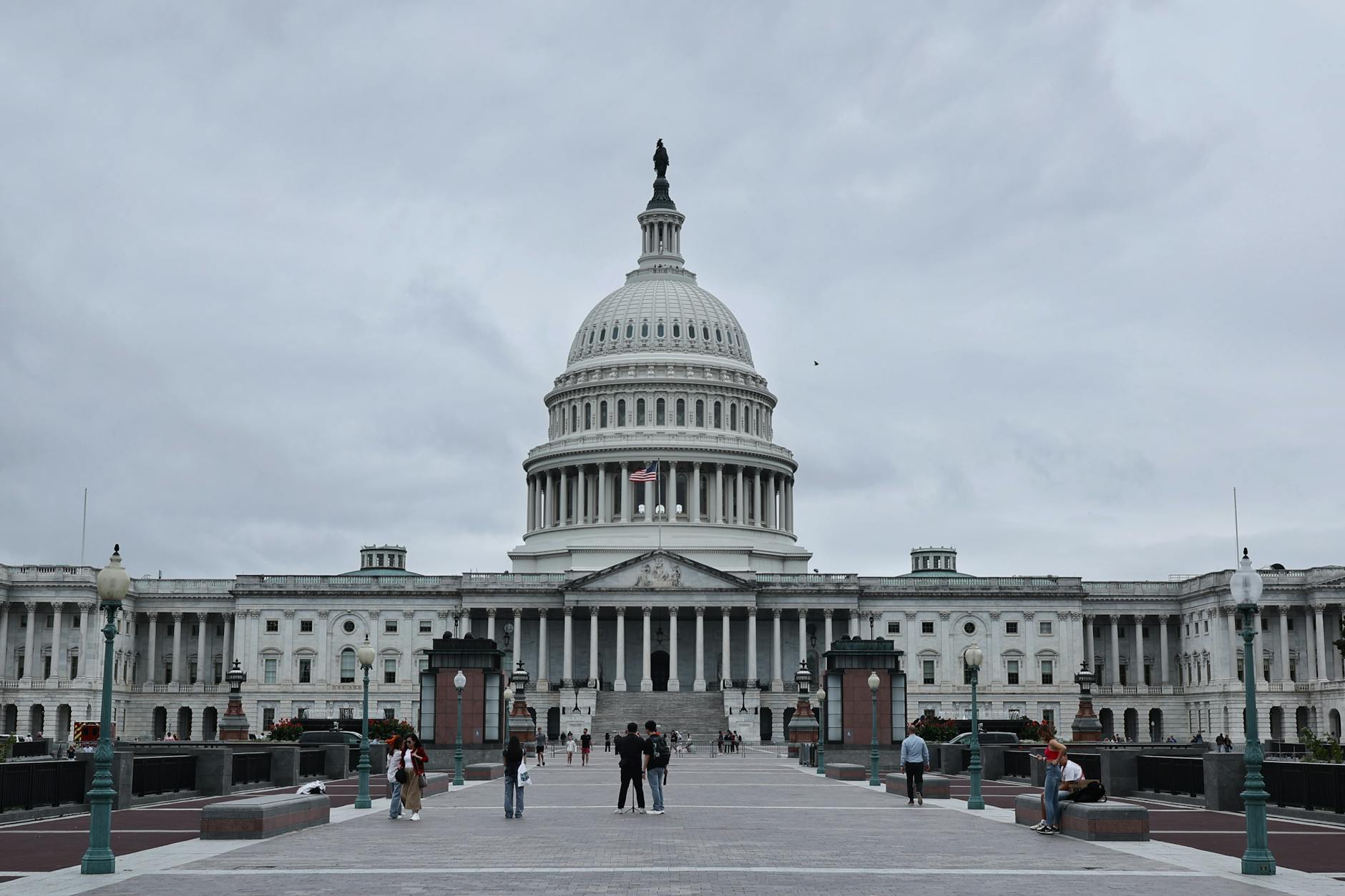
The Old Senate Chamber in the US Capitol, where the assault occurred, is accessible to visitors as part of the Capitol's public tour offerings. Standing in that room, it is worth considering that the men who witnessed the caning did not believe they were living through an exceptional moment of breakdown. They believed—correctly, as it turned out—that they were living through an escalation in a conflict that had been building for decades and that would continue to build for another five years before it produced a war.
This is the detail that the comfort myth consistently omits: political violence does not announce itself as exceptional. It presents itself as a response to exceptional provocation. Every generation that has produced it believed the provocation was real and the response was proportionate.
New Orleans, 1866: The Massacre That Reconstruction Built
The Mechanics' Institute building in New Orleans no longer stands in its original form, but the site on Dryades Street—now University Place—is marked, and the event that occurred there on July 30, 1866, constitutes one of the most consequential and least remembered episodes in American political history.
A convention of Republican delegates, most of them Black, had gathered to reconvene Louisiana's constitutional convention with the aim of extending voting rights. A procession of Black supporters marching toward the building was attacked by a mob that included Confederate veterans and members of the New Orleans police department. The assault continued inside the building. When it was over, approximately 38 people were dead and 146 wounded, the overwhelming majority of them Black delegates and their supporters.
General Philip Sheridan, commanding the military district, described the event in a telegram to Ulysses Grant as "a massacre" and characterized the police as "a set of cutthroats." His assessment did not produce meaningful federal intervention. The perpetrators faced no serious legal consequences. The massacre accelerated the political dynamics that would eventually end Reconstruction—demonstrating, with brutal clarity, that the federal government's commitment to protecting Black political participation had limits that violence could locate and exploit.
The New Orleans Central Business District, where this history occurred, is a functioning urban neighborhood. The absence of the original building does not diminish the instructive weight of the location. The question of what a democracy owes its most vulnerable members, and what mechanisms exist to enforce that obligation, was tested here at a cost that the historical record has not adequately absorbed.
Ludlow, Colorado, 1914: When the Labor War Became a War
The Ludlow Massacre site, located off Colorado Highway 10 in Las Animas County, is maintained by the United Mine Workers of America and is accessible to visitors. A monument marks the location of the tent colony where, on April 20, 1914, Colorado National Guard troops and private guards employed by the Colorado Fuel and Iron Company—a Rockefeller-controlled enterprise—attacked a settlement of striking miners and their families.
The assault began with machine gun fire into the tents. It ended with the tents burned. Two women and eleven children were found suffocated in a pit beneath one tent, where they had taken shelter from the shooting. The death toll across the subsequent ten-day armed conflict that the attack triggered reached approximately 200 people.
The Ludlow Massacre is significant in the context of political polarization because it represents a moment when the disagreement between labor and capital was not metaphorical. It was conducted with weapons, at the direction of men who faced no criminal consequences for ordering the assault. The Colorado governor requested federal troops not to protect the miners but to disarm them. The ideological distance between the parties was not a matter of differing policy preferences. It was a matter of whether one side's members were entitled to physical safety.
That level of material conflict is what actual polarization looks like when it reaches its operational extreme. The current American political environment, for all its genuine toxicity, has not produced anything at Ludlow's scale. This is not a reason for complacency. It is a reason for precision about where on the spectrum of historical American conflict the present moment actually sits.
What the Comfort Myth Costs Us
The argument that polarization is uniquely severe today serves a psychological function: it makes the present feel exceptional, which makes the people living through it feel that their responses are justified by the unprecedented nature of the circumstances. This is a very old feeling. The delegates at the Mechanics' Institute believed the circumstances were unprecedented. The miners at Ludlow believed the circumstances were unprecedented. Charles Sumner, recovering from a fractured skull, believed the circumstances were unprecedented.
Some of those beliefs were partially correct. Each of those moments was a genuine escalation within a longer conflict. None of them was the first chapter of the story, and none of them was the last.
The physical sites where these events occurred are not monuments to American failure. They are evidence that the democratic experiment has been stress-tested before, that it has failed those tests in specific and documented ways, and that it has—unevenly, partially, at enormous cost—continued. That is not a reassuring conclusion. But it is an honest one, and honesty about the historical record is the only foundation on which a realistic assessment of the present can be built.
Visit these places not to despair but to calibrate. The country has been here before. The question that the historical record cannot answer—that no laboratory can answer—is whether knowing that changes anything about what happens next.