The Architecture of Forgetting: How American Cities Learned to Destroy Themselves for Federal Dollars
The Laboratory of Urban Self-Destruction
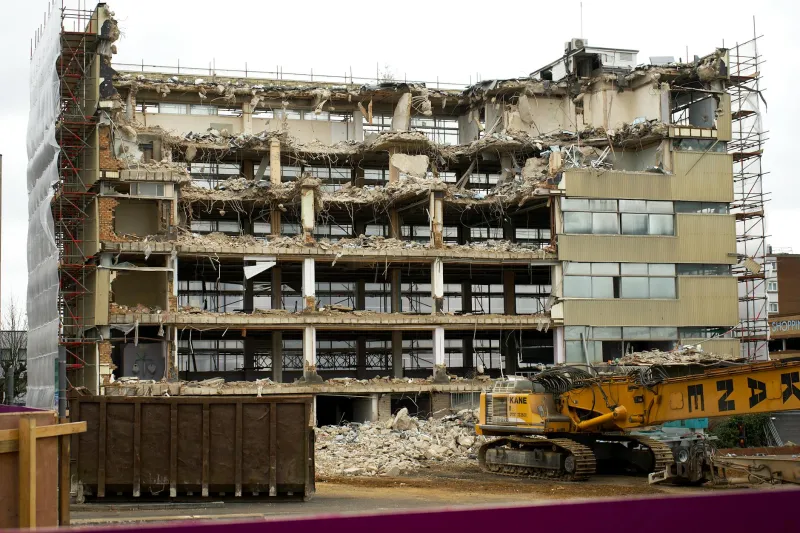
History offers few experiments as controlled as American urban renewal. Between 1949 and 1974, the federal government provided cities with $13.5 billion to systematically demolish their oldest neighborhoods. The results were remarkably consistent: over 2,500 projects across nearly 1,000 cities, displacing more than one million Americans while erasing the physical record of organic urban development that had taken generations to create.
This was not random destruction. It was methodical, legally sanctioned, and enthusiastically embraced by local officials who competed for federal funding to tear down what their predecessors had spent centuries building. The psychology driving this phenomenon reveals patterns that stretch back to antiquity—the universal human tendency to legitimize new power structures by erasing the physical evidence of what came before.
The Roman Precedent: Damnatio Memoriae in Concrete
The Romans perfected the art of systematic forgetting through damnatio memoriae—the official erasure of individuals from public memory by destroying their monuments, inscriptions, and architectural legacy. American urban renewal operated on identical psychological principles, just at neighborhood scale rather than individual scale.
When Baltimore demolished its Harlem Park neighborhood in 1951, city officials weren't simply clearing "slums"—they were performing the same ritual Augustus Caesar enacted when he demolished Mark Antony's monuments throughout the empire. Both actions served to legitimize new authority by eliminating the physical traces of previous social arrangements.
The parallels extend beyond symbolism to methodology. Roman officials required Senate approval for major demolitions, just as American cities needed federal approval for urban renewal projects. Both systems created bureaucratic distance between decision-makers and the communities being erased, allowing officials to frame destruction as administrative necessity rather than cultural violence.
The Aztec Model: Tenochtitlan and the Psychology of Replacement
When Spanish conquistadors systematically dismantled Tenochtitlan and used its stones to build Mexico City, they followed a pattern that urban renewal would later replicate. The psychology remains consistent across cultures: new regimes establish legitimacy by physically replacing what came before, using the actual materials of the old order to construct the new.
American urban renewal employed this same substitution logic. Federal guidelines explicitly required cities to demonstrate that new construction would occupy the exact footprint of demolished neighborhoods. The psychological message was clear—progress meant not just building something new, but proving that the old way of living was so fundamentally flawed that it deserved complete erasure.
This explains why urban renewal targeted neighborhoods with the deepest historical roots rather than genuinely problematic areas. Cities like Hartford demolished neighborhoods that had functioned continuously since the 1600s, while leaving genuinely dysfunctional industrial districts untouched. The goal was never efficiency—it was the psychological satisfaction of proving that modern planning could improve on centuries of organic development.
The Federal Incentive Structure: Manufacturing Consent for Destruction
The genius of federal urban renewal lay in its incentive structure, which transformed local officials into enthusiastic agents of their own cities' destruction. The program offered a 2:1 federal match for local investment, but only for projects that met minimum demolition thresholds. Cities couldn't access federal money for rehabilitation or incremental improvement—they had to prove their commitment to wholesale replacement.
This created what behavioral economists would recognize as a classic commitment device. Local officials who might have preferred gradual neighborhood improvement were forced to choose between federal funding for total demolition or no federal assistance at all. The program's structure eliminated middle-ground solutions, forcing cities to embrace maximum destruction to access any federal support.
The psychological appeal was irresistible. City officials could simultaneously demonstrate their modern planning sophistication, access unprecedented federal resources, and avoid the messy political work of negotiating with existing communities. Urban renewal offered the illusion of clean-slate problem-solving that appeals to human psychology across all historical periods.
The Pattern Recognition: Why Communities Choose Erasure
Urban renewal succeeded because it satisfied deep psychological needs that transcend specific historical moments. The same impulse that drove medieval European cities to rebuild their centers in Gothic style—erasing Romanesque architecture to demonstrate cultural advancement—motivated American cities to embrace comprehensive redevelopment.
Examining the neighborhoods targeted for demolition reveals the pattern. Cities consistently chose areas with the strongest sense of place and community cohesion for urban renewal projects. Boston's West End, Pittsburgh's Lower Hill District, and San Francisco's Fillmore weren't selected because they were failing—they were selected because their success as organic communities made them perfect symbols of what modern planning could supposedly improve upon.
The federal program's most lasting achievement wasn't the housing projects or civic centers that replaced demolished neighborhoods—most of those have since been demolished themselves. Its real legacy was teaching American cities that progress required the systematic destruction of physical continuity with the past.
The Archaeological Record of Institutional Amnesia
Today, urban archaeologists study the foundations of demolished urban renewal neighborhoods like ancient ruins. These excavations reveal the same patterns found in sites where conquering armies systematically destroyed predecessor civilizations—evidence of deliberate, comprehensive erasure rather than gradual abandonment or natural decay.
The parallel to archaeological sites isn't coincidental. Urban renewal operated according to the same psychological principles that have driven systematic cultural destruction throughout human history. The specific technologies and bureaucratic structures change, but the underlying impulse remains constant: new authority structures establish legitimacy by eliminating the physical evidence of alternative ways of organizing social life.
American cities learned to demolish themselves because federal policy aligned perfectly with timeless human psychology—the satisfaction of proving that contemporary solutions can improve on everything that came before, even when the evidence suggests otherwise. The laboratory of urban renewal demonstrated that this impulse remains as powerful today as it was when Augustus razed Mark Antony's monuments or Spanish conquistadors dismantled Tenochtitlan stone by stone.