The Emperor Who Invented the Personal Brand: Augustus Caesar and the Curated Self
The Emperor Who Invented the Personal Brand: Augustus Caesar and the Curated Self
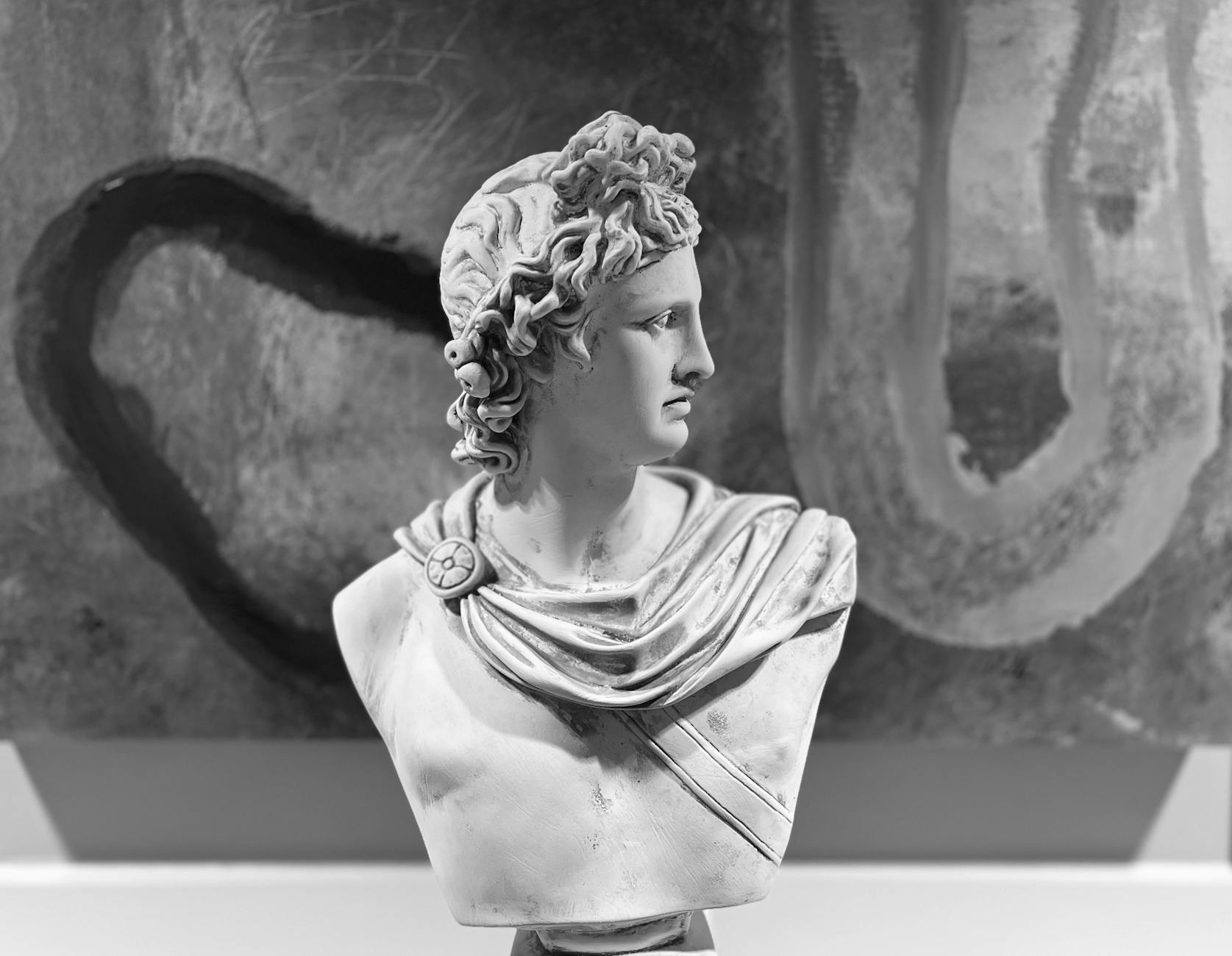
There is a particular kind of intellectual vertigo that comes from standing in front of a Roman portrait bust and realizing you have seen that face before — not in another museum, but on a phone screen, in a campaign advertisement, in the thumbnail of someone with several million followers. The face belongs to Augustus Caesar, and the reason it looks familiar is not coincidental. The systematic image program he built around himself in the first century BC established principles of visual self-presentation that have never, in any meaningful sense, been abandoned.
History is the only laboratory that never closes, and the experiment Augustus ran on public perception is one of the most thoroughly documented in the ancient record. Its results are observable in every medium that has existed since.
The Problem of Ruling People Who Have Never Seen You
To understand what Augustus accomplished, it helps to understand the scale of the problem he faced. The Roman Empire at his accession stretched from Britain to Egypt, from Spain to the borders of Persia. The vast majority of its population — tens of millions of people — would never travel to Rome, would never attend a public ceremony at which he appeared, would never have any direct encounter with the man who governed their lives. He was, for most of his subjects, an abstraction.
Abstractions are politically unstable. Authority, to be effective, requires not just institutional legitimacy but something more visceral: a sense that the person exercising power is real, knowable, and worthy of the role. Augustus understood this intuitively, and he understood something else that many rulers before him had not fully grasped — that images could do the work of presence.
The solution he commissioned was systematic, coordinated, and unprecedented in its scale. Thousands of portrait sculptures were produced, distributed across every province of the empire, and installed in temples, public squares, government buildings, and private homes. These were not independent interpretations by local artists. They were derived from a small number of officially sanctioned prototype types — the Prima Porta Augustus being the most famous — which established precisely how the emperor was to be rendered.
The Lie That Told a Truth
The most immediately striking feature of Augustan portraiture, to a modern eye, is that it is not realistic. Augustus died at 76, but his official portraits show him perpetually young — smooth-skinned, calm-featured, idealized in the manner of Greek sculpture. This was not an accident or a flattery that slipped past quality control. It was a deliberate choice that communicated a specific message: this man exists outside the ordinary processes of decay and time. He is not merely a politician. He is something closer to a permanent condition.
The contrast with his predecessor Julius Caesar is instructive. Caesar's portraits, produced during his lifetime, are notably more realistic — a middle-aged man with the kind of face that records experience. Augustus looked at that approach and made a different calculation. Realism invites scrutiny. Idealization forecloses it. A face that looks like a face can be argued with. A face that looks like a god is harder to contest.
This is not a superficial observation about aesthetics. It is a claim about how visual authority operates. The image does not merely represent the subject — it constructs the terms on which the subject will be evaluated. Augustus was not asking his subjects to assess him accurately. He was asking them to accept a predetermined assessment, delivered through the visual vocabulary of divinity and youth.
Consistency as a Form of Power
Perhaps the most underappreciated aspect of the Augustan image program is its insistence on consistency. Across an empire spanning thousands of miles, across decades of production, the portraits remained recognizably the same. A resident of Roman Britain and a resident of Roman Egypt would have seen the same face, rendered in the same idealized manner, communicating the same set of associations.
This consistency was itself a demonstration of power. It required resources, coordination, and the ability to enforce aesthetic standards across an enormous geographic and cultural range. But it also served a deeper psychological function: repetition generates familiarity, and familiarity generates trust. Subjects who saw the same face in every public building, on every coin that passed through their hands, in the household shrines that Roman families maintained, did not experience that face as propaganda. They experienced it as simply the way things were — as natural and unremarkable as the landscape.
The coin is worth dwelling on, because it was the most democratic distribution mechanism in the ancient world. Every person in the empire who engaged in commerce handled coins bearing the emperor's image. This was not incidental. Control of the coinage was control of the most widely distributed image medium that existed, and Augustus used it deliberately. Every transaction was, in a minor key, an encounter with his face.
From the Forum to the Feed
The line from the Augustan image program to contemporary personal branding is not a metaphor. It is a structural continuity in how image-based authority operates, running through every medium that has existed in the intervening two millennia.
Consider the specific techniques: the selection of a small number of approved image types, consistently reproduced across all channels. The preference for idealization over documentation — the campaign photo that is lit and retouched to project vitality and authority rather than record appearance. The strategic placement of images in every space where the target audience is present. The use of the most widely distributed medium of the era — coins then, social media now — to ensure that the face becomes ambient, unavoidable, and therefore familiar.
American political campaigns have understood this logic since at least the era of Franklin Roosevelt, who managed his image with unusual care given his physical limitations, and whose fireside radio broadcasts were the acoustic equivalent of Augustan portraiture — a carefully constructed intimacy designed to make millions of people feel they personally knew a man they had never met. The television era refined the visual dimension of this further. The social media era has democratized the tools while leaving the underlying logic intact.
What Instagram and its equivalents added to the formula was not a new principle but a new scale of participation. The curated self-portrait is no longer only the province of emperors and presidents. It is the default mode of self-presentation for anyone who maintains a public digital profile. The specific aesthetic choices differ — the Augustan ideal was marble-smooth youth and divine calm; the contemporary ideal varies by platform and audience — but the fundamental act is identical: selecting the image that constructs the desired perception, and distributing it as widely as possible.
What the Record Suggests
Augustus was not the first ruler to use images strategically, but he was the first to do so at industrial scale, with explicit coordination across an entire empire, and with enough documentary survival that historians can trace the system in detail. That record is instructive not because it reveals something uniquely cynical about the ancient world, but because it reveals something consistent about human psychology: people form judgments about others primarily through images, those judgments are highly susceptible to curation, and the person who controls the image controls a significant portion of the narrative.
This has not changed. The laboratory has been running this experiment continuously since the first century BC, across every culture and every medium that has existed. The results are consistent. We are, all of us, looking at portraits of Augustus every time we open an app — and the emperors, influencers, and candidates who understand that are the ones who have read the record.