Diocletian's Price Freeze: The 1,700-Year-Old Economic Experiment We Keep Failing to Learn From
Diocletian's Price Freeze: The 1,700-Year-Old Economic Experiment We Keep Failing to Learn From
History is the only lab that never closes. Its experiments are messier than anything conducted in a university setting, the sample sizes are enormous, and the subjects had no idea they were being observed. That last detail is, arguably, the point. When you want to understand how human beings actually respond to economic pressure—rather than how they report they would respond on a survey—you consult the record. And the record on price controls is remarkably consistent.
The entry most worth studying begins in the third century AD.
The Empire at the Breaking Point
By the time Diocletian ascended to power in 284 AD, the Roman Empire had endured fifty years of near-continuous crisis. Military coups cycled through emperors at a pace that made stable governance nearly impossible. To fund perpetual warfare and the bloated administrative apparatus required to hold together a territory stretching from Britain to Mesopotamia, successive emperors had done what governments under fiscal pressure reliably do: they debased the currency. Silver coins were alloyed with increasing proportions of bronze until the denarius contained almost no silver at all. The result was inflation that, by some estimates, drove prices up by a factor of fifty over the course of the third century.
Diocletian, a capable administrator who had restored a degree of order to the empire, understood this was unsustainable. His response was the Edictum De Pretiis Rerum Venalium—the Edict on Maximum Prices—issued in 301 AD. The document was extraordinary in its ambition. It set legally enforceable price ceilings on more than 1,200 goods and services, from wheat and wine to the wages of a sewer cleaner. Violation was punishable by death.
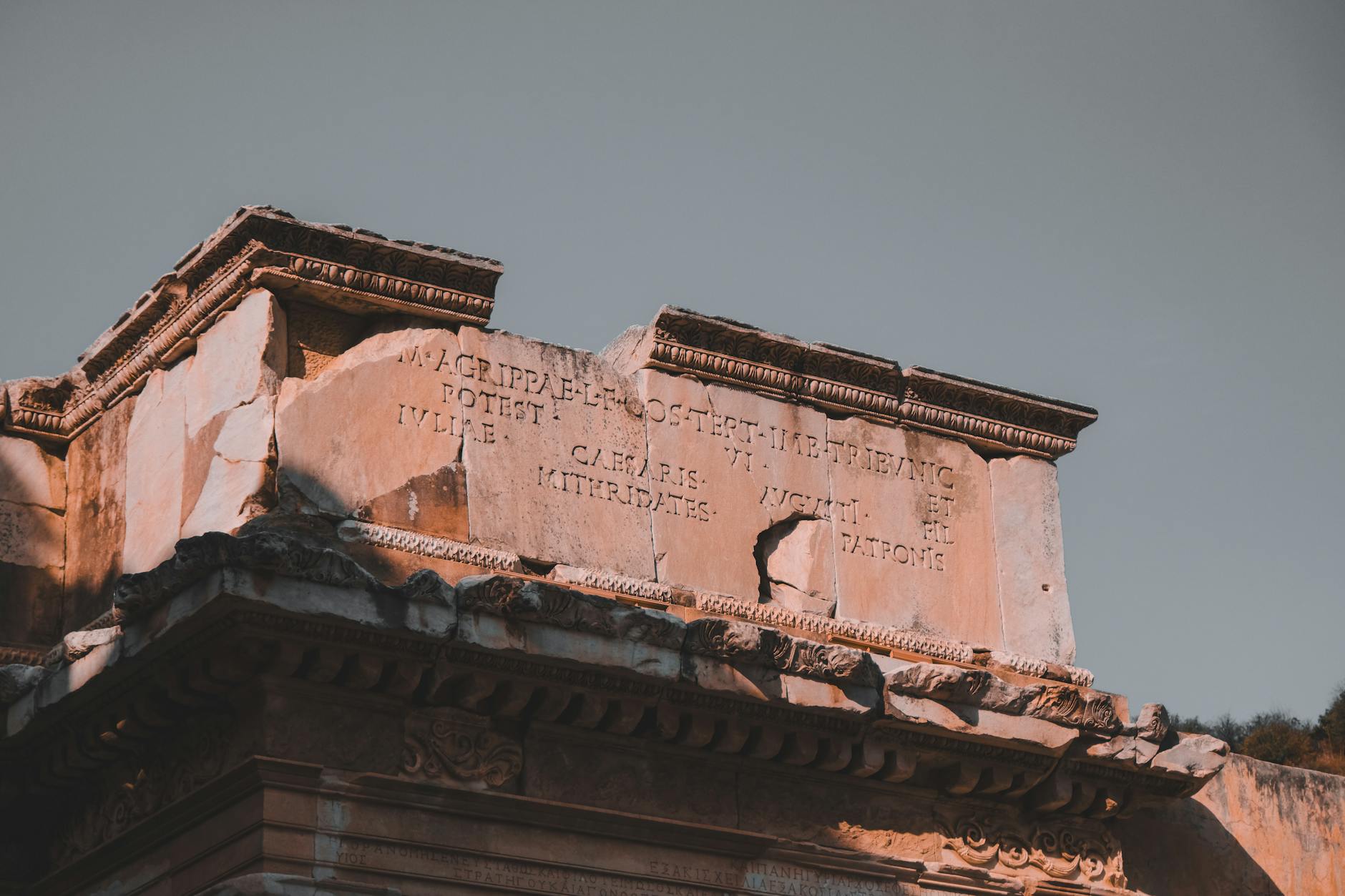
The edict was inscribed on stone tablets and posted in public squares across the empire. It was, in modern terms, a comprehensive intervention.
What Actually Happened
The edict failed almost immediately. Contemporary accounts—most notably from the Christian writer Lactantius, who was hostile to Diocletian but whose observations align with the economic logic—describe merchants withdrawing goods from markets rather than selling at a loss. When the cost of producing or transporting an item exceeded the government-mandated ceiling, the rational response was not to sell at a loss; it was to stop selling altogether. Goods vanished. Black markets emerged. Some sellers simply closed.
Lactantius wrote that "much blood was shed over small and cheap items" as enforcement became both brutal and futile. Within a few years, the edict had been quietly abandoned. The inflation it was designed to address continued.
What Diocletian's planners had assumed was that sellers would absorb the gap between their costs and the mandated price in the interest of civic order. What sellers actually did was make the rational individual calculation: selling at a mandated loss is not commerce, it is confiscation. They opted out.
A Pattern That Refuses to Stay Ancient
The specifics of 301 AD feel remote. The pattern does not.
During the American Revolution, the Continental Congress and individual colonial legislatures attempted to impose price controls on goods essential to the war effort. The results tracked Diocletian's experience with uncomfortable precision. Farmers withheld produce rather than accept depreciated Continental currency at fixed prices. Shortages developed in cities while food sat unharvested or was quietly redirected to British-controlled markets where prices were not fixed. George Washington's army at Valley Forge was not simply a casualty of winter; it was, in part, a casualty of a price control regime that had caused the supply chain to seize.
Almost two centuries later, the experiment ran again. In August 1971, President Richard Nixon announced a ninety-day freeze on wages and prices, responding to inflation driven by the costs of the Vietnam War and the breakdown of the Bretton Woods monetary system. The freeze was popular in the short term—Americans, like all people, find the idea of stable prices appealing in the abstract. In practice, cattle ranchers stopped sending livestock to slaughter rather than sell at a loss. Grocery store shelves experienced shortages. When controls were eventually lifted, prices spiked sharply, producing the very inflationary burst the policy had been designed to prevent.
The 1970s energy crisis added further evidence. Price controls on domestic oil, intended to protect consumers, reduced the incentive for domestic producers to increase output and encouraged consumption, deepening the shortage they were meant to alleviate.
Why Governments Keep Trying
If the historical record is this consistent, why does the intervention recur? The answer lies less in economics than in psychology—specifically, in the psychology of both the governed and those who govern them.
Inflation is visible. A price tag is a concrete, legible object. The mechanisms that produce inflation—monetary expansion, supply chain disruption, demand shocks—are abstract and diffuse. A government that freezes prices is doing something a citizen can observe and understand. A government that addresses monetary supply or structural supply-side constraints is doing something that requires explanation. Democratic systems, and autocratic ones with legitimacy concerns, tend to favor the legible intervention.
There is also what economists sometimes call the seen and the unseen. The price freeze that prevents a merchant from raising prices is visible. The goods that merchant quietly stops stocking, the market that quietly contracts, the black market that quietly forms—these are harder to photograph and harder to blame on the policy that caused them.
Diocletian's stone tablets were, in this sense, excellent communication. His actual outcomes were not.
What the Record Suggests
None of this is an argument for passivity in the face of inflation. Central banks, supply-side investment, and fiscal discipline are legitimate tools with their own complicated histories. The point is narrower: the historical record constitutes a large-sample, multi-century study on one specific intervention, and the results are not ambiguous.
When the cost of complying with a price ceiling exceeds the cost of non-compliance—whether that non-compliance takes the form of hiding goods in a Roman warehouse, selling cattle privately in 1971 Iowa, or simply closing a business—the majority of economic actors will choose non-compliance. This is not greed or civic failure. It is the predictable behavior of people managing their own survival under pressure.
Diocletian had the advantage of being able to inscribe his policy in stone. The historical verdict on that policy has proven equally durable. The question is not whether we can read the inscription. It is whether we are willing to take it seriously as evidence.
The lab has been running this experiment for seventeen centuries. The results are in.