Death Penalty for Overcharging: The Roman Price Control That Collapsed an Economy
Death Penalty for Overcharging: The Roman Price Control That Collapsed an Economy
History is the only laboratory that never closes, and some of its most instructive experiments were run not by scientists but by desperate emperors. The Edict on Maximum Prices, issued by Diocletian in 301 AD, is one of those experiments. It was sweeping, it was ruthlessly enforced, and it failed so completely that contemporary observers were already documenting the wreckage within months of its publication. For anyone willing to read the record, the result of that experiment has been available for seventeen hundred years.
We keep declining to read it.
The Empire Was Already on Fire
To understand why Diocletian reached for price controls, you have to understand the Rome he inherited. The third century had been catastrophic — a revolving door of emperors, most of whom were assassinated, combined with near-constant military pressure on every frontier. To pay for the legions, the imperial treasury had done what governments under fiscal pressure reliably do: it debased the currency. Silver coins were cut with increasing proportions of bronze until they contained almost no silver at all. The result was inflation that, by some estimates, drove prices across the empire to roughly fifty times their levels a century earlier.
Diocletian, a capable administrator in most respects, looked at this inflation and concluded that the problem was not the debased currency — it was the merchants. The edict's preamble is almost poignant in its misdirection, blaming the crisis on the "avarice" of traders who were, in reality, simply pricing goods to reflect what the currency was actually worth. His solution was to publish a schedule of maximum prices for over 1,200 goods and services — everything from wheat and wine to the daily wage of a sewer cleaner — and to attach the death penalty to violations.
What the Stone Tablets Actually Said
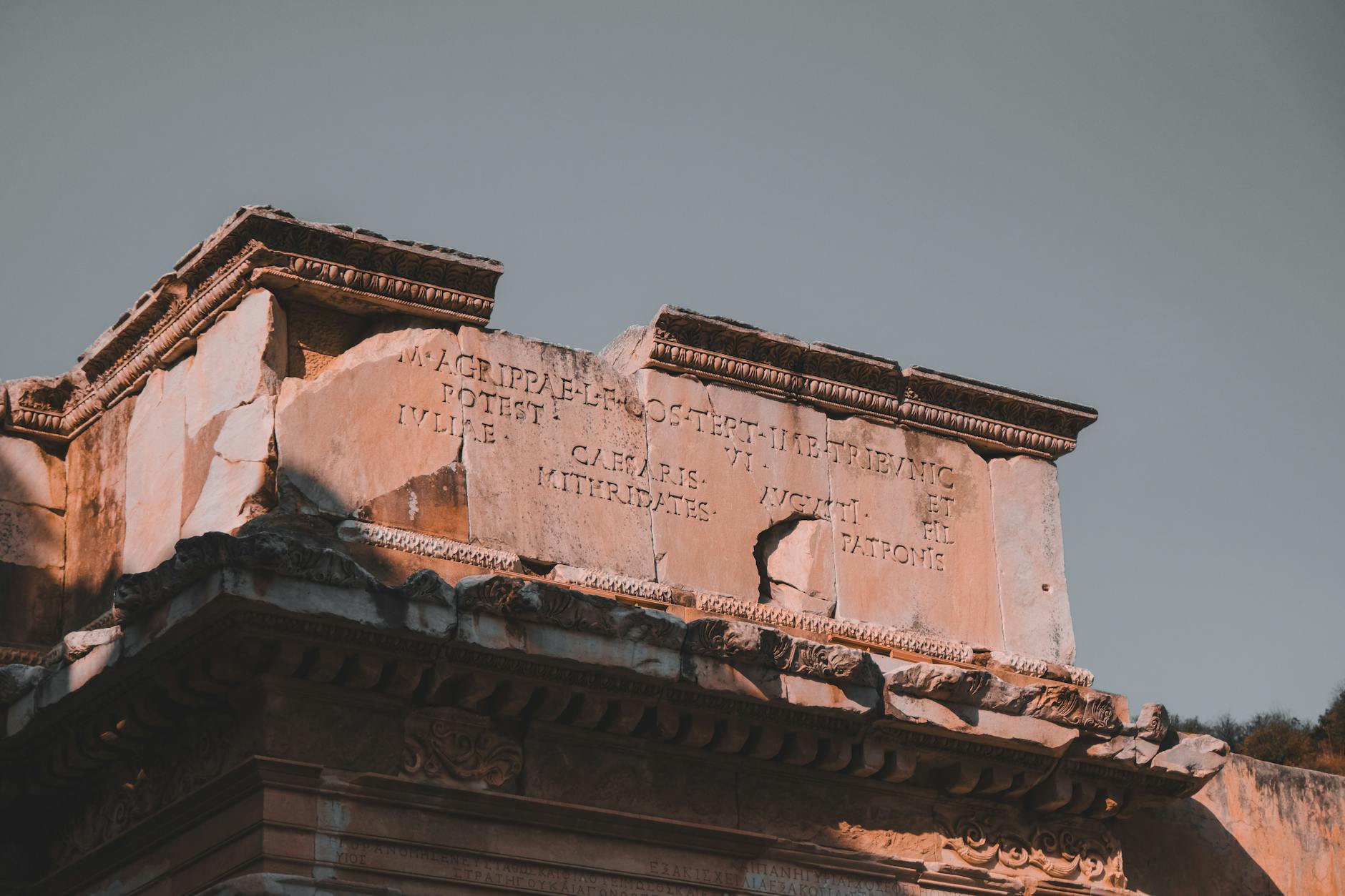
The edict was inscribed on stone and posted across the empire, and fragments of it survive today. Reading the price schedule is a strange experience: it is simultaneously a remarkable snapshot of daily Roman commerce and a document of profound economic misunderstanding. A pound of beef: 8 denarii. A pair of military boots: 100 denarii. A teacher of arithmetic, per student per month: 75 denarii. The granularity suggests genuine administrative ambition.
What the edict could not specify, however, was where goods would actually go once the price ceiling sat below what it cost to produce or transport them. Merchants are not abstractions in an economic model — they are people who respond to incentives. When the legal price of a good falls below the cost of selling it, rational sellers do not continue selling at a loss out of civic duty. They find alternatives.
In Rome's case, those alternatives arrived quickly and in predictable forms. Merchants withdrew inventory from public markets rather than sell at a mandated loss. Goods that had previously moved through open commerce shifted into informal and black-market channels, where the actual price — the one that reflected actual supply and actual demand — was charged without the inconvenience of a stone tablet. Lactantius, a contemporary writer, described the outcome with notable precision: the law produced not lower prices but scarcity, as sellers simply refused to bring their goods to market at all. In some regions, the effect was that common goods became effectively unobtainable at any price.
The Mechanism Is Not Complicated
The economic logic here requires no advanced training to follow, which is part of what makes the edict's repeated reinvention across history so striking. A price is not merely a number — it is a signal. When the price of a good rises, it communicates three things simultaneously: to consumers, that they should use less of it or find substitutes; to producers, that they should make more of it; and to traders, that moving it from where it is cheap to where it is expensive will be profitable. A price ceiling that sits below the market-clearing level suppresses all three signals at once. Production does not increase. Distribution does not improve. Consumers do not moderate demand. The shortage that the ceiling was meant to address is instead locked in place.
Diocletian's treasury had created the inflation by issuing too much debased currency. Capping prices did not reduce the amount of debased currency in circulation. It simply added a layer of enforcement theater on top of an unchanged monetary reality, and the monetary reality won.
The edict was quietly abandoned sometime in the early fourth century, likely after Diocletian's abdication in 305 AD. No official repeal was announced. The empire simply stopped enforcing it.
The Argument That Refuses to Stay Settled
What makes the Diocletian episode genuinely instructive for an American audience is not that it happened — it is that it keeps happening, in recognizable variations, across cultures that had no access to the Roman record. Rent control debates in New York and San Francisco replay the same structural argument: well-intentioned price ceilings reduce the incentive to supply the capped good, producing the scarcity they were designed to alleviate. Wartime price controls in the United States during the 1940s produced shortages and black markets that required a parallel rationing bureaucracy to manage. The specifics change; the mechanism does not.
This is precisely what the historical record offers that a single economics study cannot: not one data point, but hundreds of them, run across wildly different cultures, political systems, and centuries, all returning the same result. The laboratory has been running this experiment for millennia. The results are in.
None of this is to say that inflation is not a genuine harm — Diocletian's subjects were suffering real economic damage, and the political pressure to act was real. The lesson is not that governments should be indifferent to rising prices. It is that the intervention must address the actual cause. Diocletian's inflation was a monetary phenomenon produced by currency debasement. The cure was monetary: stabilizing the currency, which his successor Constantine eventually accomplished with the gold solidus. Price controls were not a cure. They were a performance of control in place of the harder work of achieving it.
The edict's stones are still being excavated. New fragments surface periodically at archaeological sites across the former empire — Turkey, Greece, North Africa, the Balkans. Each one is a dispatch from the oldest argument in economics, arriving in the present tense, still waiting for a reader who will take it seriously.