The Laboratory That Never Closes: Why Every Place on Earth Is a Window Into Human Nature
The World's Largest Psychology Experiment
In university psychology departments across America, researchers recruit undergraduates with promises of course credit to participate in carefully controlled experiments. These studies, conducted in windowless rooms with artificial lighting, attempt to decode the mysteries of human behavior through statistical analysis of how twenty-year-olds respond to hypothetical scenarios.
Meanwhile, the greatest psychological experiment in history continues unfolding across every street corner, town square, and abandoned lot on the planet. This laboratory requires no funding, no ethics committee approval, and no consent forms. It has been running continuously for thousands of years, generating data on how humans actually behave when the stakes are real.
The Unchanging Constants of Human Psychology
When Spanish conquistadors encountered the Aztec Empire in 1519, they found a civilization that would have been immediately recognizable to Roman generals from fifteen centuries earlier. The same hierarchical structures, the same methods of crowd control, the same techniques for projecting power through architecture and ceremony. The technology differed, but the underlying psychology remained identical.
This pattern repeats across every culture and century because human nature operates according to fixed principles. People respond to scarcity by hoarding resources. They defer to authority figures who display confidence and control. They form coalitions against perceived threats. They compete for status through visible displays of wealth and power. These behaviors manifest whether the setting is a medieval European village, a frontier American town, or a modern suburban subdivision.
Reading the Archaeological Record of Behavior
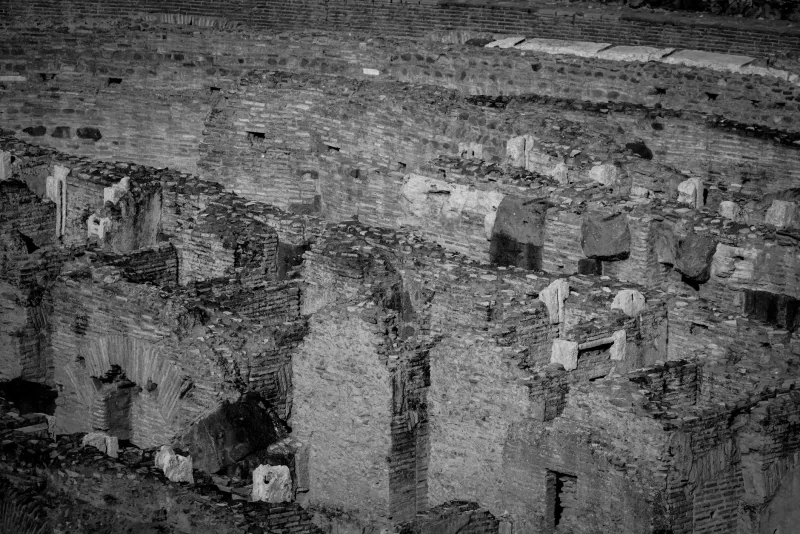
Every place tells a story about the people who shaped it, and these stories reveal consistent patterns in human decision-making. The layout of ancient Roman cities demonstrates how authorities used urban planning to control population movement and prevent rebellion. The location of medieval castles shows how elites positioned themselves to monitor and tax trade routes. The design of American company towns reveals how corporations manipulated worker psychology through environmental control.
These patterns persist because they work. The same principles that Roman engineers used to design aqueducts appear in modern infrastructure projects. The crowd management techniques developed for medieval markets influence contemporary retail design. The propaganda methods perfected by Depression-era governments shape today's public relations campaigns.
The Laboratory of Crisis Response
Human psychology becomes most visible during moments of crisis, when normal social conventions break down and people reveal their core motivations. The archaeological record of disasters, wars, and economic collapses provides unfiltered data on how communities respond to existential threats.
The abandoned mining towns scattered across the American West demonstrate how quickly social cohesion dissolves when economic incentives disappear. The ghost towns of the Dust Bowl show how environmental catastrophe triggers mass migration patterns that mirror responses to similar crises throughout history. The ruins of failed utopian communities reveal why idealistic social experiments consistently founder on the same psychological obstacles.
Modern Places, Ancient Patterns
Contemporary American landscapes continue generating new data for this ongoing experiment. The rise and fall of shopping malls follows the same lifecycle as medieval market towns. The development patterns of suburban subdivisions mirror the territorial behavior observed in hunter-gatherer societies. The gentrification of urban neighborhoods demonstrates how status competition drives residential choices across all historical periods.
Technology changes the tools available to human ambition, but it does not change the fundamental drives that motivate behavior. Social media platforms exploit the same status-seeking impulses that drove medieval nobles to build ostentatious castles. Cryptocurrency speculation follows the same psychological patterns as historical financial bubbles. Remote work arrangements trigger the same territorial anxieties that shaped frontier settlement patterns.
The Advantage of Historical Perspective
Understanding these patterns provides practical advantages for navigating contemporary challenges. Politicians who study how previous generations responded to economic uncertainty can predict voter behavior more accurately than those who rely on polling data alone. Urban planners who examine the long-term consequences of past development decisions make better choices about current projects. Business leaders who understand the historical psychology of market cycles position their companies more effectively for future changes.
The Continuous Experiment
This laboratory continues operating because human psychology remains constant while circumstances continue changing. Each new generation faces the same fundamental challenges—securing resources, establishing status, forming alliances, managing threats—but within novel technological and social contexts. Their responses generate fresh data about how ancient behavioral patterns adapt to contemporary conditions.
Every place on Earth participates in this experiment, from the most remote rural village to the densest urban center. The results accumulate in the physical landscape, creating a permanent record of human choices and their consequences. This record provides the most comprehensive dataset available for understanding how people actually behave when facing real decisions with lasting consequences.
The laboratory that never closes surrounds us completely. Every building, street, and boundary line represents a hypothesis about human nature that has been tested by time and circumstance. The results are visible to anyone willing to read the landscape as a record of the unchanging patterns that drive human behavior across all cultures and centuries.