Survival of the Fearless: How Medieval Europe's Greatest Catastrophe Selected for Modern Personality Types
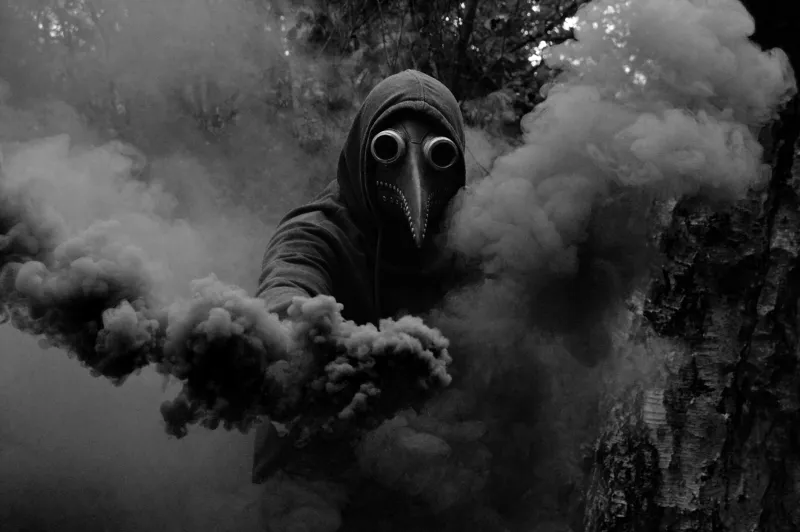
The Laboratory of Catastrophe
Between 1347 and 1351, the Black Death killed an estimated 75 to 200 million people across Europe and Asia. But the plague didn't kill randomly. Like a massive, uncontrolled psychology experiment conducted across an entire continent, it systematically eliminated certain behavioral types while preserving others, creating a natural selection event that rewired European society in ways that persist today.
This wasn't simply demographic change—it was psychological evolution in real time. The survivors weren't just lucky; they possessed specific traits that helped them navigate catastrophe. Those same traits would surface again and again throughout history, including in American crises from the Great Depression to Hurricane Katrina.
The Psychology of Plague Survival
Recent analysis of historical records reveals that plague survivors exhibited distinct behavioral patterns. They were more likely to challenge authority, negotiate aggressively for better wages, and embrace previously forbidden forms of expression. These weren't cultural shifts that developed over generations—they emerged within decades of the plague's end.
The flagellant movements that swept through Europe during the plague years provide a window into this psychological transformation. These groups of self-mortifying penitents represented a radical break from established religious hierarchy, creating their own rituals and traveling from town to town without official sanction. They weren't just responding to spiritual crisis; they were demonstrating the kind of risk-taking, authority-challenging behavior that helped people survive when traditional structures collapsed.
Similarly, the English Peasants' Revolt of 1381 wasn't simply about economic grievance. The survivors of the plague had learned that established power structures could fail catastrophically. When faced with new taxes and restrictions, they possessed both the psychological framework and the confidence to challenge the system directly.
The Renaissance as Trauma Response
What historians traditionally call the birth of the Renaissance might be better understood as a continent-wide trauma response. The sudden explosion of secular art, the questioning of religious authority, and the embrace of individual achievement all align with documented psychological responses to mass catastrophe.
Survivors of the Black Death had witnessed the complete failure of medieval Europe's most trusted institutions. The Church couldn't stop the plague through prayer. Feudal lords couldn't protect their serfs. Traditional medicine proved useless. In response, survivors developed what psychologists today would recognize as post-traumatic growth—a phenomenon where individuals emerge from catastrophe with enhanced capabilities and altered worldviews.
This explains why Renaissance art suddenly began celebrating individual achievement rather than collective piety, why scientific inquiry accelerated despite religious opposition, and why economic structures shifted toward individual enterprise. The plague hadn't just killed people; it had killed faith in collective solutions.
The American Pattern
Every major catastrophe in American history has produced remarkably similar psychological fingerprints. The Civil War created a generation of risk-takers who built the transcontinental railroad and settled the West. The Great Depression survivors became the entrepreneurs and innovators of the post-war boom. The 2008 financial crisis produced a cohort of gig economy pioneers who rejected traditional employment structures.
These aren't coincidences. They represent the same selective pressures that operated during the Black Death, favoring individuals who could adapt quickly, challenge existing systems, and create new solutions when old ones failed.
Consider the psychological profile of Americans who thrived during the 2008 financial crisis. They were more likely to start businesses, change careers, and embrace new technologies. They demonstrated higher risk tolerance and greater willingness to challenge conventional wisdom. These are precisely the traits that helped medieval Europeans survive the plague years.
The Neuroscience of Catastrophic Selection
Modern neuroscience helps explain why catastrophes consistently produce similar survivor types. Extreme stress activates specific neural pathways that favor quick decision-making, risk-taking, and social flexibility. Individuals whose brains are naturally wired for these responses have significant survival advantages during crises.
More importantly, catastrophes don't just select for these traits—they amplify them. Survivors emerge from crisis with enhanced confidence in their ability to navigate uncertainty and challenge authority. This psychological shift becomes self-reinforcing, creating communities of individuals predisposed to innovation and social change.
Lessons for Modern Crisis Management
Understanding the psychological dynamics of catastrophic survival offers practical insights for contemporary crisis management. Rather than focusing solely on material recovery, effective crisis response must account for the psychological transformation of survivors.
The most successful post-crisis communities are those that harness the enhanced risk tolerance and authority-challenging behavior of survivors rather than attempting to suppress these traits. Medieval Europe's rapid economic and cultural development after the Black Death occurred precisely because surviving communities embraced rather than resisted the psychological changes catastrophe had produced.
American cities that recovered most successfully from disasters like Hurricane Katrina or the Detroit economic collapse were those that supported entrepreneurial risk-taking and challenged existing governance structures rather than attempting to restore pre-crisis conditions.
The Persistence of Pattern
The Black Death demonstrates that human psychology operates according to consistent principles across centuries and cultures. The same survival traits that helped medieval Europeans navigate plague years continue to determine who thrives during contemporary crises.
This consistency offers both warning and hope. While we cannot prevent catastrophes, we can predict with remarkable accuracy how they will reshape the psychology of survivors. Understanding these patterns allows us to design more effective recovery strategies and better support the psychological transformation that catastrophe inevitably produces.
The laboratory of history never closes, and its most consistent finding is this: catastrophes don't just change who survives—they change how survivors think, act, and organize society. The Black Death didn't create the Renaissance; it created Renaissance people.