When Democracy Becomes Too Expensive: The American Towns That Choose to Stop Being Towns
When Democracy Becomes Too Expensive: The American Towns That Choose to Stop Being Towns
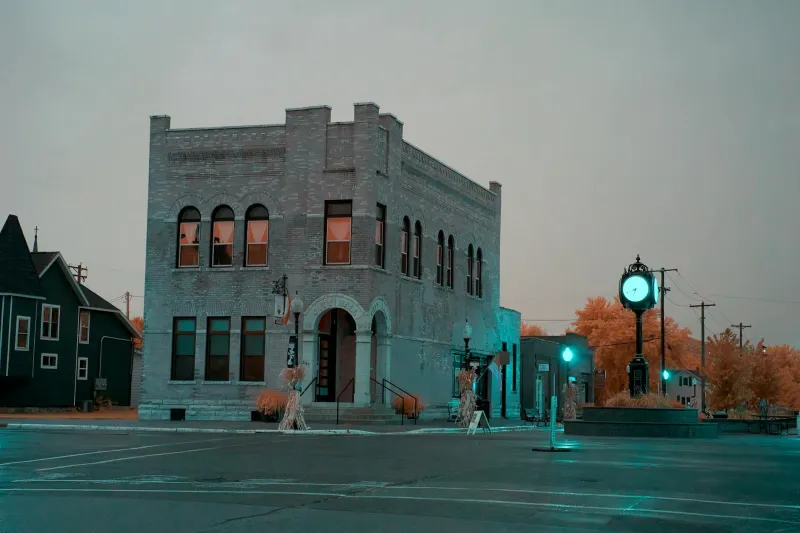
In 2019, the city of Marne, Iowa, population 125, held its final city council meeting. After 140 years of municipal existence, the residents voted to dissolve their incorporation and let Pottawattamie County take over their governance. The decision wasn't particularly dramatic—no heated debates, no passionate speeches about local identity. The mayor simply noted that maintaining a water system, conducting elections, and filing state paperwork had become more expensive than the community could sustain. Marne joined the roughly 200 American municipalities that dissolve themselves each decade, choosing administrative extinction over fiscal struggle.
This pattern of voluntary municipal death reveals something profound about human psychology that neither modern political science nor ancient history texts adequately capture: the moment when collective identity becomes too expensive to maintain. The decision to stop being a place—to surrender the legal fiction that transforms a geographic area into a governed community—represents one of democracy's most understudied phenomena.
The Mathematics of Giving Up
The immediate triggers for municipal dissolution appear straightforwardly economic. Small towns across the Midwest and Great Plains face identical calculations: maintaining basic infrastructure costs more than local tax revenue can support. Water treatment plants require certified operators. Elections demand poll workers and ballot printing. State compliance reports need filing. Insurance premiums must be paid. When these fixed costs exceed what a shrinking population can bear, dissolution becomes mathematically inevitable.
Yet purely economic explanations fail to explain why some communities of identical size and financial stress choose different paths. Neighboring towns with nearly identical demographics and revenue challenges make opposite decisions—one voting for dissolution, another restructuring debt and raising taxes to preserve municipal status. The difference lies not in spreadsheets but in collective psychology.
Ancient Precedents for Modern Surrenders
The phenomenon of voluntary civic dissolution echoes throughout recorded history. During the late Roman Empire, numerous small cities across Gaul and Britain simply abandoned their municipal charters, finding the cost of maintaining Roman civic institutions greater than any benefit they provided. These communities didn't disappear—people continued living in the same locations—but they ceased to exist as formal political entities.
Similarly, medieval Italian city-states regularly dissolved themselves when the expense of independence exceeded their capacity to generate revenue. The psychological pattern remained consistent: communities maintained their civic identity as long as the benefits of self-governance outweighed its costs, but once that balance shifted, dissolution followed swiftly.
Modern American municipal dissolutions follow this same psychological trajectory. The decision rarely emerges from sudden crisis but develops gradually as residents lose faith in local government's ability to deliver meaningful benefits. When maintaining a city council feels like expensive theater rather than effective governance, dissolution becomes psychologically acceptable.
The Identity Crisis Behind the Paperwork
What transforms a collection of houses into a community isn't geography but shared investment in collective identity. Municipal incorporation represents a formal declaration that residents consider themselves sufficiently connected to justify the expense and effort of self-governance. Dissolution signals the opposite: acknowledgment that whatever once bound the community together has weakened beyond repair.
This erosion of civic identity typically precedes financial crisis by years or decades. Long before Marne's final city council meeting, residents had stopped attending municipal elections, stopped volunteering for local boards, stopped viewing city government as meaningfully different from county administration. The formal dissolution simply acknowledged what had already occurred psychologically.
Modern communication technology accelerates this process in ways that ancient communities never experienced. When residents can access services, entertainment, employment, and social connections across vast geographic areas, the psychological importance of hyperlocal governance diminishes. Why maintain expensive municipal infrastructure when county government provides equivalent services at lower per-capita cost?
The Paradox of Democratic Choice
Municipal dissolution presents democracy with a unique paradox: communities using democratic processes to vote themselves out of democratic existence. This isn't failure of democracy but rather its logical extension—residents exercising collective choice to abandon collective choice-making.
The irony proves instructive for understanding democratic psychology more broadly. Democratic institutions require not just formal structures but sustained popular investment in those structures' value. When citizens lose faith in local governance's effectiveness, maintaining democratic forms becomes performative rather than functional.
This pattern extends beyond municipal government. Throughout American history, communities have repeatedly created, modified, and abandoned political institutions based on shifting calculations of cost versus benefit. The township system that once governed much of rural America largely disappeared as residents decided county government could provide equivalent services more efficiently. School districts consolidated from over 100,000 in 1940 to fewer than 15,000 today through similar psychological processes.
What Survives When Government Dies
Interestingly, municipal dissolution rarely eliminates community identity entirely. Former residents of dissolved towns continue identifying with their historic place names, maintaining informal social networks, and preserving local traditions. What disappears isn't the community but rather its formal political expression.
This distinction matters for understanding both American civic culture and human psychology more broadly. People maintain multiple, overlapping identities—family, professional, regional, national—and adjust the relative importance of each based on changing circumstances. Municipal identity represents just one layer in this complex psychological architecture.
The towns that vote themselves out of existence aren't disappearing; they're simply acknowledging that formal political identity no longer serves their residents' needs effectively enough to justify its expense. In a democracy, that choice itself represents the system working as designed, even when the result is the system's own termination.
The pattern will likely continue as demographic and economic pressures reshape rural America. Understanding why communities choose political death over political struggle offers insights into democratic psychology that laboratory experiments on college students simply cannot provide. History remains the only laboratory where we can observe entire societies making collective decisions about their own existence—and the results reveal as much about human nature as any controlled study ever could.