The Promise That Curved Away: How Railroad Speculation Taught Small-Town America to Believe Expensive Lies
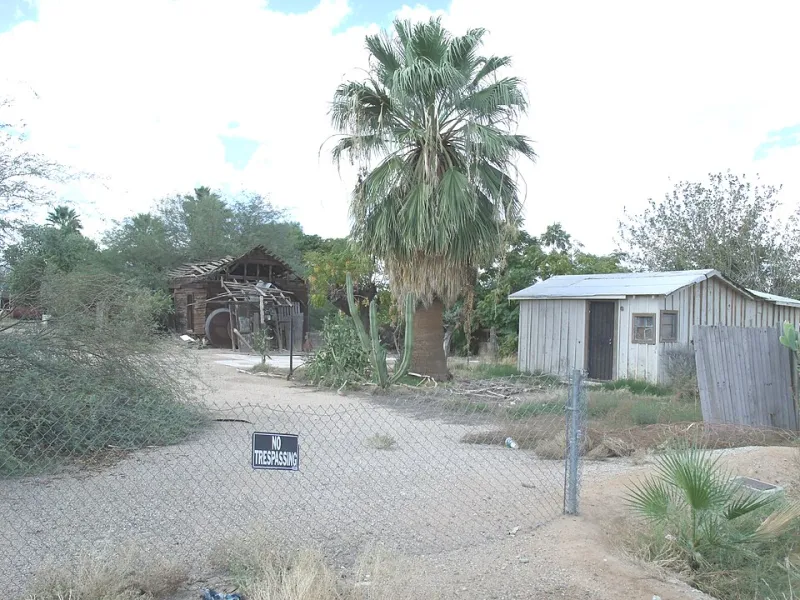
Photo: Marine 69-71, CC BY-SA 4.0, via Wikimedia Commons
In the second half of the nineteenth century, hundreds of American towns borrowed against their futures to attract a railroad that was never coming. The mechanics of the swindle were well understood even at the time. What has never been adequately explained is why so many communities, watching their neighbors fail, lined up to try again.
The answer lies not in the particular greed of railroad promoters or the particular naivety of frontier settlers. It lies in something considerably older and more durable: the human tendency to treat a powerful institution's promise as a form of certainty, especially when the alternative is confronting how fragile your situation actually is.
The Arithmetic of the Railroad Promise
To understand what the railroad meant to a nineteenth-century prairie town, it is necessary to understand what the prairie town was without one. Grain spoiled before it could reach a distant market. Manufactured goods arrived by wagon at prices that made them luxuries. Doctors, lawyers, and teachers were scarce because the educated classes had little reason to settle somewhere that could not reliably connect them to the wider world. The railroad was not merely an economic convenience. It was the difference between a permanent community and an encampment.
Railroad companies understood this dependency with precision. Their standard practice was to solicit competing bids from towns along a proposed route, accepting cash subsidies, free land for depots and yards, and tax exemptions — then routing the line toward whichever community had offered the most, regardless of what had been implied to the others. The towns that lost the competition were frequently left holding bond debt they had issued in anticipation of the prosperity that never arrived.
This was not a secret. Newspaper editors across the Midwest wrote about it with evident frustration as early as the 1860s. The pattern was documented, discussed, and condemned — and then repeated, in town after town, for another forty years.
Chetopa, Kansas, and the Education of a Prairie Town
Chetopa, Kansas, incorporated in 1868 along the southern tier of the state, offers a representative case. The town sat at what promoters confidently described as a natural junction point for lines running south into Indian Territory and west toward the expanding cattle ranges. Local boosters issued bonds, platted lots that sold briskly to settlers who had read the promotional literature, and donated a right-of-way corridor through the center of town.
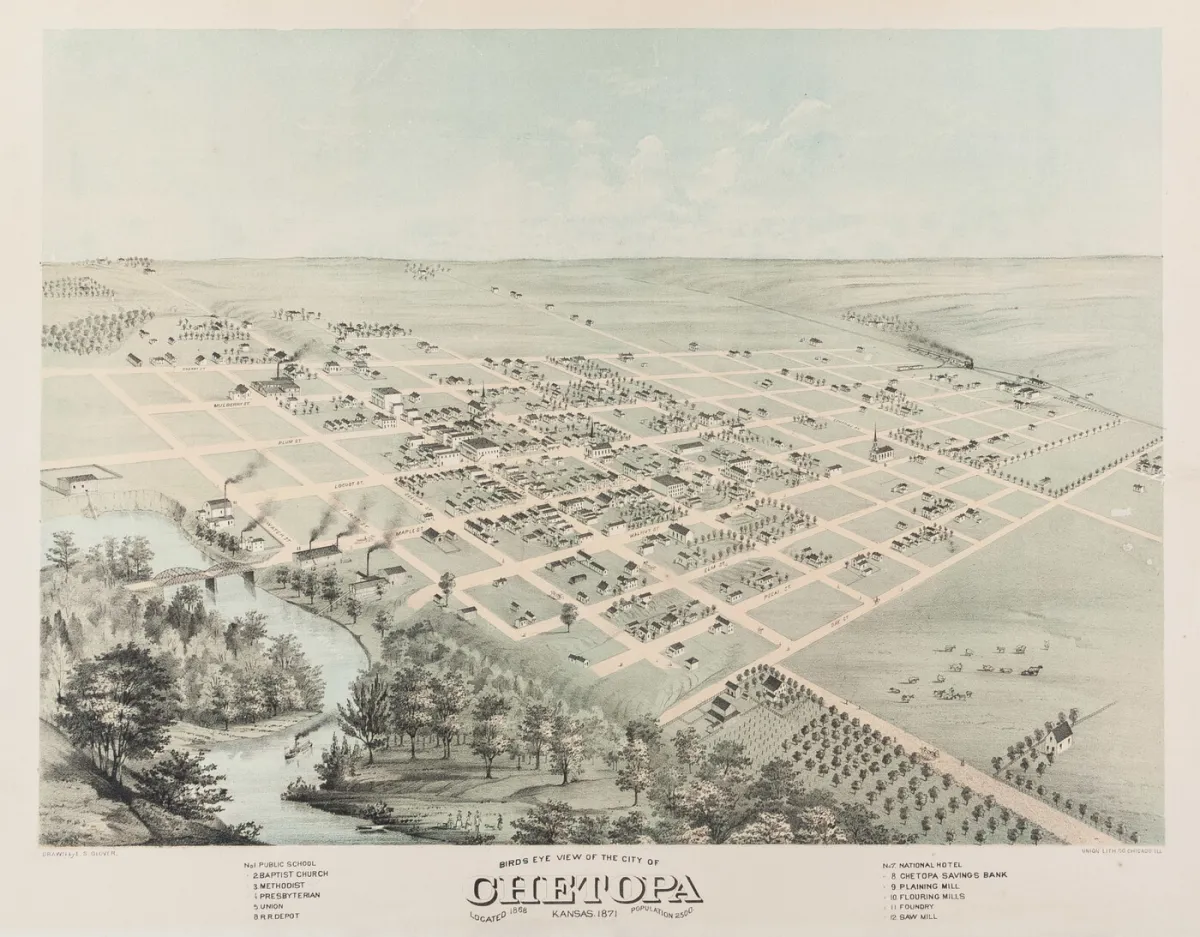 Photo: Chetopa, Kansas, via www.cartermuseum.org
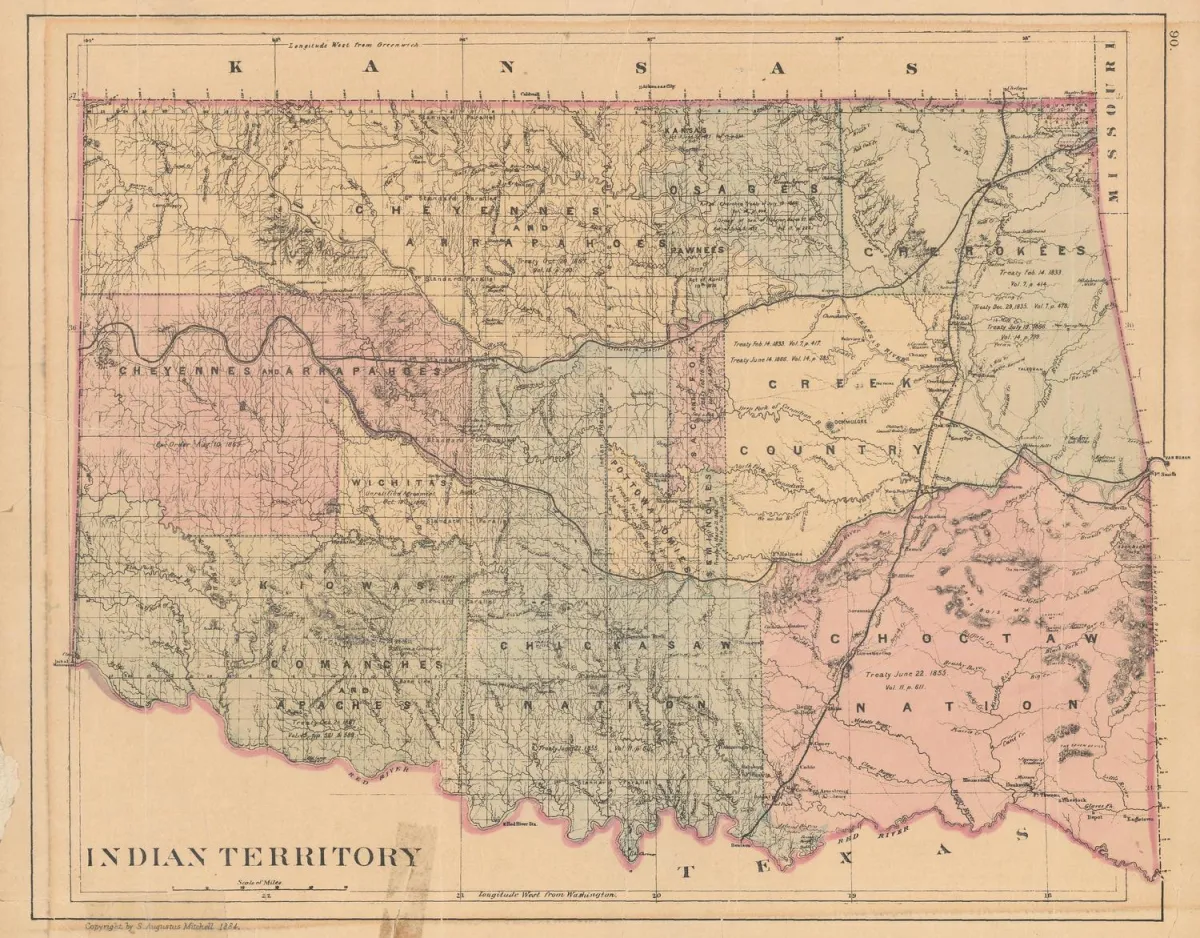 Photo: Indian Territory, via gateway.okhistory.org
The Missouri, Kansas and Texas Railway — the Katy, as it was known — did come through Chetopa. Briefly. Then the more profitable route west shifted the line's priority, and the town found itself on a branch rather than a trunk. The economic consequences were immediate. Merchants who had overextended their inventory, settlers who had paid inflated lot prices, and the county government that had issued the subsidy bonds all found themselves holding obligations calibrated to a prosperity that had been redirected forty miles north.
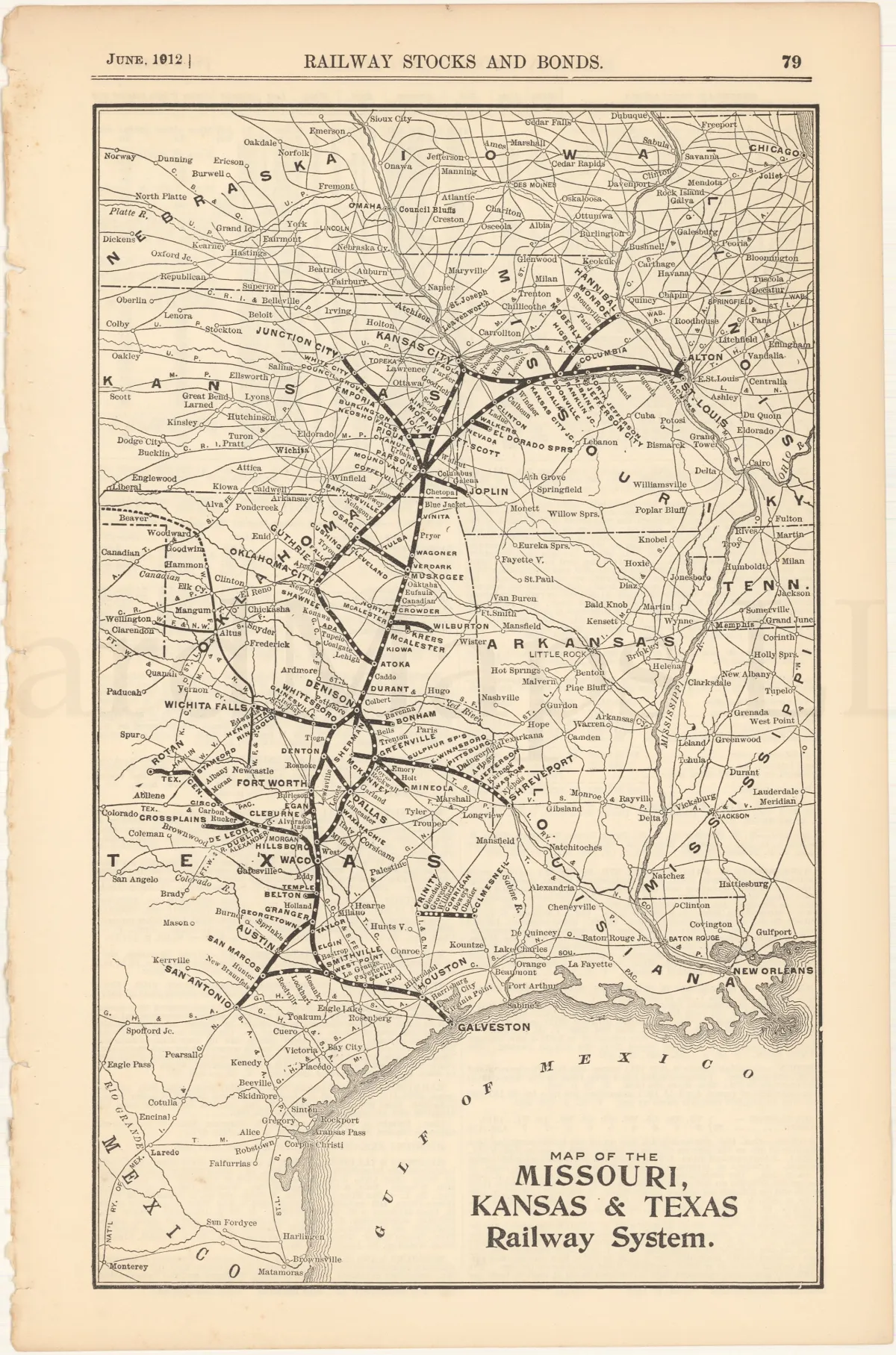 Photo: Missouri, Kansas and Texas Railway, via wardmaps.com
Chetopa did not disappear. It contracted, adapted, and persisted — as most of these towns did, at a smaller scale than their founders had imagined. But the debt remained. For a generation, Chetopa's taxpayers serviced bonds that had been issued to attract a railroad whose most valuable traffic passed them by. The town had, in effect, paid a substantial fee to learn a lesson that neighboring communities had already paid to learn before them.
The Psychology of the Certain Future
What makes this pattern historically interesting is not the fraud — fraud is commonplace in every era — but the credulity that made it so consistently effective. These were not uninformed people. The settlers who built Chetopa and dozens of towns like it were frequently literate, experienced in commerce, and aware of the railroad industry's reputation for broken promises. Many of them had already lived through one failed speculation before arriving on the Kansas prairie.
The psychologist Daniel Kahneman's work on what he called "optimism bias" describes a tendency that shows up in laboratory experiments with college students but also in the entire collected record of human commercial behavior: people consistently overestimate the probability of favorable outcomes when the alternative assessment is too threatening to sustain. For a settler family that had sold its eastern property, relocated its household, and staked its children's future on a prairie town, the belief that the railroad would come was not irrational. It was necessary. The psychological cost of acknowledging the uncertainty was simply higher than the psychological cost of believing the promise.
Railroad promoters did not create this tendency. They inherited it, recognized it, and priced their services accordingly.
The Institutions That Survived on Belief
There is a secondary dimension to this story that the railroad era illustrates with particular clarity: the power of institutional authority to substitute for evidence. A railroad company in 1875 was not merely a business. It was, in the perception of most frontier settlers, something closer to a government — a powerful, distant, and technically sophisticated organization whose decisions shaped geography and determined futures. The railroad's promise carried weight not because it was backed by a legal guarantee but because the institution making it seemed too consequential to lie casually.
This dynamic appears throughout human history wherever a powerful institution encounters a dependent population. The Roman colonist who accepted the emperor's land grant, the medieval peasant who believed the lord's promise of protection, and the Kansas homesteader who issued bonds to subsidize a railroad route were all performing the same cognitive operation: converting an asymmetric power relationship into a kind of faith. The institution's size became, in the mind of the dependent party, a proxy for its reliability.
The railroad companies were not, in most cases, lying outright. They were making conditional promises — if the economics favor your route, the line will come through your town — and allowing their audiences to hear unconditional ones. The distinction mattered enormously to the companies' lawyers and very little to the settlers who had already spent the money.
What the Empty Depots Still Say
Across the rural Midwest and Great Plains, abandoned railroad depots still stand in towns that never reached their projected populations. They are, in a sense, the most honest monuments in the American landscape: physical records of what a community believed about its future at a specific moment in time.
The belief was not foolish. It was human. The capacity to trust a powerful stranger's promise, to treat anticipated prosperity as sufficient grounds for present sacrifice, is not a defect that education or experience reliably corrects. It is a feature of human cognition that served our ancestors reasonably well in the small, stable communities where it evolved, and that continues to serve the people who sell things to us extremely well today.
The railroad promoters are gone. The mechanism they exploited is not.