When Communities Choose Their Own Demolition: The Psychology Behind America's Urban Renewal Votes
The Democratic Path to Self-Destruction
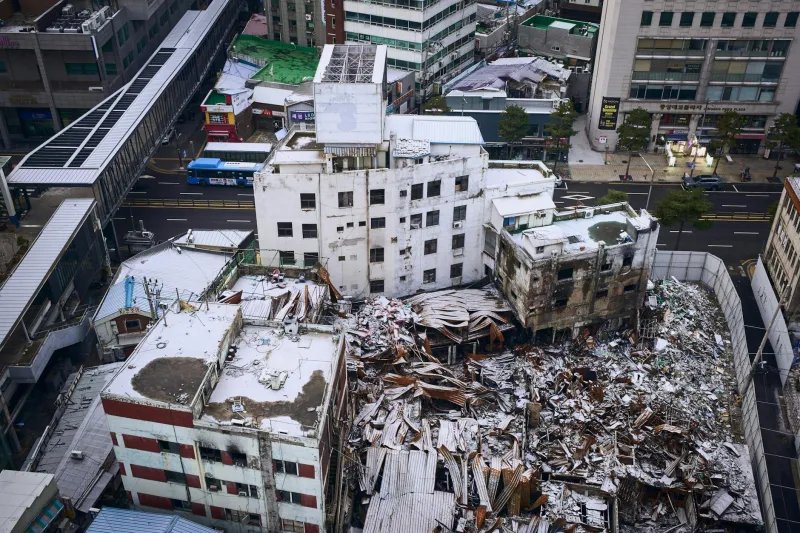
On November 4, 1958, the residents of Norwich, Connecticut, went to the polls and voted to erase their own downtown. By a margin of nearly three to one, they approved a urban renewal plan that would demolish 130 buildings, displace 400 families, and replace their nineteenth-century commercial district with a modern shopping plaza and municipal complex. The vote wasn't close, and it wasn't controversial—it was celebrated as a triumph of democratic planning and progressive thinking.
 Photo: Norwich, Connecticut, via static.vecteezy.com
Norwich wasn't alone. Across America in the 1950s and 1960s, dozens of cities held similar referendums, and the results were remarkably consistent: communities voted enthusiastically to tear down their own historic cores. These weren't decisions imposed by distant bureaucrats or corporate developers—they were democratic choices made by ordinary residents who genuinely believed that destroying their past was the key to securing their future.
Six decades later, most of these communities are still trying to recover from the democracy that destroyed them. The shopping plazas have closed, the municipal complexes look dated, and tourism boards desperately promote the few historic buildings that escaped the wrecking ball. The psychology that drove these collective acts of self-destruction offers crucial insights into how communities make decisions about their own identity—and why outside money can turn local pride into local demolition crews.
The Federal Seduction
Urban renewal's democratic appeal rested on a simple proposition: the federal government would pay for local improvements if communities were willing to start fresh. The Housing Act of 1949 and subsequent legislation offered to cover up to two-thirds of demolition and redevelopment costs, transforming urban renewal from an expensive local burden into an apparent federal gift.
But the program's psychological appeal went deeper than financial incentives. Urban renewal promised to solve the fundamental problem of American cities in the automobile age: how to compete with suburbia without becoming suburban. Federal planners offered a seductive vision of modern downtowns with wide streets, ample parking, and clean architectural lines that would attract middle-class shoppers back from the suburban malls.
This vision exploited a particular moment in American psychology when faith in expert planning and modern design had reached its peak. The same generation that had won World War II and built the interstate highway system believed that technical expertise could solve any problem, including the problem of outdated urban form. Voting for urban renewal felt like voting for progress itself.
The referendum process added democratic legitimacy to what was essentially a federal program. By requiring local votes on renewal plans, the program transformed potential resistance into active participation. Residents weren't just accepting federal intervention—they were demanding it.
The Mechanics of Collective Forgetting
Urban renewal votes revealed how communities could be convinced to abandon their own history through carefully managed democratic processes. The typical referendum campaign followed a predictable pattern: local business leaders and civic organizations would form a renewal committee, federal planners would present architectural renderings of the proposed improvements, and newspapers would editorialize about the choice between progress and decay.
Opposition typically came from property owners in the renewal area and elderly residents with emotional attachments to existing buildings. But these voices were easily marginalized as representing narrow self-interest against community-wide benefits. The renewal process created a psychological framework where preserving the past appeared selfish while embracing demolition appeared civic-minded.
The campaigns also exploited temporal bias in human decision-making. Voters were asked to weigh immediate, visible problems—aging buildings, narrow streets, limited parking—against speculative future benefits from preservation that were difficult to quantify. Urban renewal offered concrete solutions to concrete problems, while preservation advocates could only offer abstract arguments about historical value and community character.
Perhaps most importantly, the referendum process created a false binary between renewal and decay. Federal funding was conditional on comprehensive redevelopment, so communities couldn't vote for selective preservation or gradual improvement. The choice was presented as total renewal or inevitable decline, making demolition appear not just beneficial but necessary.
Case Study: The Destruction of Hartford's Front Street
Hartford, Connecticut's Front Street district offers a particularly stark example of democratic self-destruction. In 1960, the city's residents voted to demolish a thriving commercial district that included the nation's oldest continuously operating hotel, dozens of small businesses, and residential buildings housing nearly 1,000 people.
 Photo: Hartford's Front Street, via i.dailymail.co.uk
The renewal campaign emphasized Front Street's problems: aging infrastructure, mixed commercial and residential use, and buildings that didn't meet modern fire codes. Architectural renderings showed a gleaming new civic center with ample parking and modern amenities that would anchor Hartford's downtown revival.
What the renderings didn't show was the social ecosystem that urban renewal would destroy. Front Street's mixed-use development supported a diverse community of small business owners, elderly residents on fixed incomes, and working families who could afford downtown living. The renewal plan displaced this entire community in favor of a civic center that, while architecturally impressive, generated no residential population and limited commercial activity.
The vote wasn't close—Hartford residents approved the Front Street renewal plan by a two-to-one margin. Post-election interviews revealed that many voters had never visited the renewal area but trusted expert assurances that demolition was necessary for downtown's survival.
Today, Hartford's civic center anchors a downtown that empties after business hours, and the city has spent decades trying to encourage the kind of mixed-use development that urban renewal destroyed. The democratic process that seemed to solve Hartford's urban problems in 1960 created different, more intractable problems that persist today.
The Psychology of Institutional Authority
Urban renewal's democratic success revealed how federal authority could work through local democracy rather than against it. The program didn't impose solutions on resistant communities—it convinced communities to impose solutions on themselves by making federal expertise appear as local wisdom.
This transformation worked through several psychological mechanisms. First, the federal government's willingness to invest substantial money in local improvements signaled that renewal plans had official validation from the highest levels of expertise. If Washington was willing to pay for downtown demolition, the logic went, downtown demolition must be sound policy.
Second, the program created artificial urgency around decisions that communities might otherwise have approached gradually. Federal funding came with deadlines and compliance requirements that forced rapid decision-making about complex urban problems. This time pressure favored simple solutions—like comprehensive demolition—over complicated alternatives that required extended negotiation and planning.
Third, urban renewal exploited Americans' faith in technological solutions to social problems. The program promised that modern planning techniques could eliminate the inefficiencies and conflicts inherent in organic urban development. Voting for renewal felt like voting for rationality against tradition, science against sentiment.
The Persistent Legacy of Democratic Destruction
The cities that voted for urban renewal in the 1950s and 1960s are still living with the consequences of those democratic decisions. The modern buildings that replaced historic districts have aged poorly, the parking lots and wide streets that seemed progressive now appear sterile, and the promised economic benefits largely failed to materialize.
But perhaps more importantly, these communities lost something harder to quantify: the accumulated social capital embedded in their historic built environments. The corner stores, neighborhood bars, and mixed-income housing that urban renewal destroyed had fostered the kind of informal social networks that modern planners now recognize as crucial for urban vitality.
Contemporary efforts to revitalize these downtowns often focus on recreating the urban qualities that renewal destroyed: mixed-use development, pedestrian-scale streets, and buildings with historical character. Cities spend millions trying to manufacture the authentic urban environments that their predecessors voted to demolish for free.
Lessons for Democratic Decision-Making
Urban renewal's legacy offers sobering lessons about the relationship between democracy and expertise in community planning. The program showed how technical authority could capture democratic processes by offering seemingly objective solutions to complex social problems.
The referendum campaigns succeeded because they simplified urban development into binary choices between progress and decline, modernity and obsolescence. This simplification made democratic decision-making possible but eliminated the nuanced judgments that effective urban policy requires.
Perhaps most troubling, urban renewal demonstrated how outside funding could turn local democracy against local interests. The federal money that made renewal politically attractive also made it financially irresistible, creating perverse incentives where communities benefited from destroying their own assets.
Today's debates over climate adaptation, infrastructure investment, and downtown development often echo the psychological dynamics that drove urban renewal's democratic appeal. Understanding how entire communities convinced themselves to erase their own history provides crucial insight into how external expertise interacts with local democracy—and why the communities that most enthusiastically embrace outside solutions are often the ones that most need to resist them.