What a Town Will Answer to When It's Desperate Enough: The Economics of Renaming America
The Name as the Last Asset Left
There is a particular kind of civic meeting that has been held, in one form or another, in hundreds of American towns over the past two centuries. The details change—the year, the region, the specific crisis—but the essential shape remains constant. A community that once had reasons to believe in its own future has run out of those reasons. The railroad bypassed it, or the mine closed, or the factory relocated to a county with better tax incentives. The population has been declining for a decade. The meeting is called to discuss options, and after the realistic options have been exhausted, someone raises a hand and suggests that the town might consider changing its name.
What follows is never simply a bureaucratic exercise. It is a negotiation over identity conducted by frightened people, and the historical record of those negotiations—stretching from frontier settlements in the 1840s to struggling municipalities in the present decade—constitutes one of the more instructive archives of human psychology available to anyone willing to look.
The Railroad Auction
The most straightforward version of the transaction occurred during the great railroad expansion of the nineteenth century. As lines pushed across the Midwest and the Plains, the companies that built them possessed something approaching absolute economic power over the towns along their routes. A stop on the line meant commerce, population growth, and survival. A bypass meant slow death.
Railroad companies understood this leverage and used it. Among the instruments they employed was the naming right—the ability to designate a depot stop with whatever name served the company's interests, which sometimes meant honoring an investor, sometimes meant commemorating a company official, and occasionally meant accepting a payment from an existing town that wanted to be placed on the map under a new identity.
Plano, Illinois, offers an instructive case. The town that exists today under that name was, in its earlier incarnation, called Lisbon. When the Chicago, Burlington and Quincy Railroad arrived in the region in the 1850s, the community's leadership understood that their existing name created a complication: another Illinois town already held it. The solution was not merely practical renaming but a deliberate repositioning—Plano, drawn from the Spanish for flat land, suited the railroad's preference for clean, distinctive station names. The town did not simply accept a new label; it traded one identity for the promise of inclusion in a network that would determine whether it lived or died.
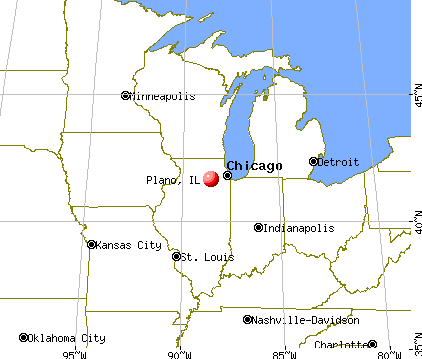 Photo: Plano, Illinois, via pics2.city-data.com
This dynamic repeated itself across the continent. Towns renamed themselves after railroad executives in exchange for favorable routing decisions. Others adopted names that sounded more prosperous, more Eastern, more civilized—names calculated to attract the kind of settler who might be hesitant to invest in a place called Mud Creek or Hog Wallow. The renaming was economic policy expressed through language because language was the only policy instrument available.
When the Industry Arrives in the Name Before It Arrives in Reality
The twentieth century introduced a more sophisticated variation on the same instinct. As American communities learned the vocabulary of economic development—branding, positioning, destination marketing—some began renaming themselves around industries and identities that had not yet materialized, on the theory that the name might summon the reality.
The results were mixed in ways that illuminate the limits of symbolic action. Halfway, Oregon, renamed itself Half.com in 2000 after a deal with the e-commerce startup of that name, receiving computers, cash, and national publicity in exchange for lending its post office address to a dot-com company's marketing campaign. The arrangement generated enormous coverage and a genuine, if temporary, economic benefit. It also demonstrated something important: the renaming worked not because the name itself created value but because the spectacle of the renaming attracted attention that the underlying community could then leverage. The name was a vessel for a media moment, not a development strategy.
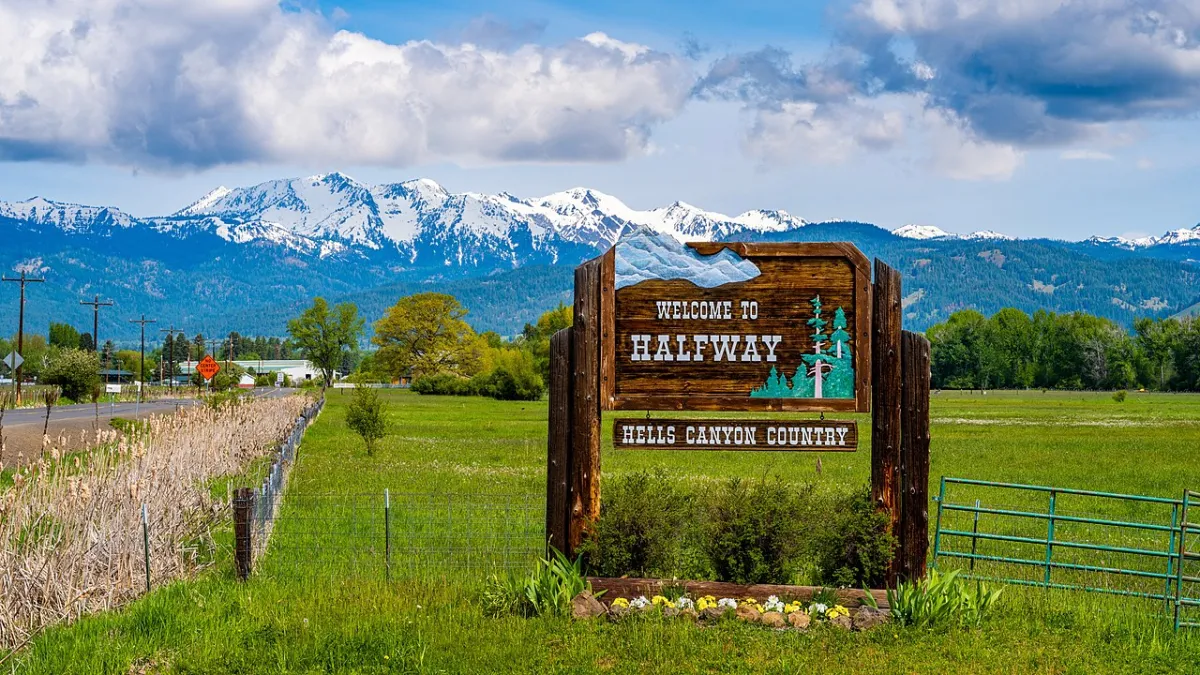 Photo: Halfway, Oregon, via www.homestratosphere.com
Contrast this with the longer history of towns that renamed themselves around agricultural or industrial identities that subsequently collapsed. Coal towns in Appalachia that incorporated their primary industry into their names found those names became epitaphs. The identity that was meant to attract investment became, after the industry departed, a marker of obsolescence. The name that had been chosen to signal prosperity now signaled its absence.
The Psychology of Symbolic Control
What unifies these episodes across two centuries is the psychological mechanism driving them. Human beings, when confronted with conditions they cannot materially control, consistently reach for symbolic control as a substitute. This is not irrationality. It is a predictable response to powerlessness, documented in contexts ranging from individual behavior under stress to collective responses to economic crisis.
The town that renames itself is doing something functionally similar to the individual who reorganizes their desk when they cannot solve the problem sitting on top of it. The action provides a genuine sense of agency. It produces a visible, tangible result—a new sign, a new letterhead, a new listing in the railroad directory—that can be pointed to as evidence of effort and intention. It costs relatively little compared to the infrastructure investments that would actually address the underlying problem. And it carries the additional advantage of being a story, something that can be told to newspapers and potential investors and the town's own residents who need to believe that something is being done.
The historical record suggests that renaming occasionally works—not because names have inherent economic power, but because the process of renaming can attract the external attention that a community then converts into real resources. The spectacle is the mechanism. The name is the ticket to the spectacle.
What Stays Behind the New Sign
There is a harder lesson embedded in the cases where renaming failed, which constitute the majority of the historical record. Place names are not merely labels; they are accumulated associations, and those associations belong to people who have not been consulted. A town that renames itself to signal a new identity must contend with the fact that the old identity continues to exist in the memories of everyone who lived through it, in the county records that predate the change, and in the persistent habits of residents who will use the old name in private long after the official designation has changed.
More fundamentally, renaming cannot address the structural conditions that made renaming seem necessary. The railroad still runs where it runs. The mine is still closed. The factory is still in another county. The new name sits atop the old problem like a coat of paint over a cracked foundation, and the crack does not care what color the paint is.
This is the deeper argument embedded in the history of American place renaming: it is not a record of civic creativity but a record of civic fear. The negotiators who gather to debate what their town should call itself are always, beneath the procedural language of the meeting, negotiating with the possibility that their community might not survive. The name they choose is an act of hope dressed in the clothing of policy. Sometimes hope is enough to change the outcome. More often, it is simply the last dignified thing available.