The Fiction That Became Geography: When American Surveyors Drew Maps of Places That Never Existed
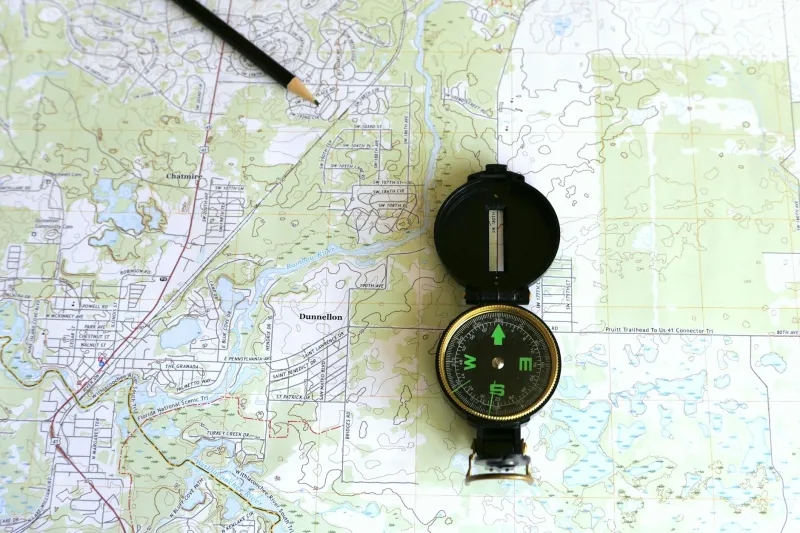
The Laboratory of Institutional Deception
In 1820, surveyor William Rector submitted his final maps of what would become eastern Kansas to the General Land Office in Washington. His neat grid showed section lines running true north-south, townships perfectly square, and the Neosho River flowing in a gentle arc exactly where federal law required it to be. There was only one problem: Rector had never actually visited half the territory he claimed to have measured.
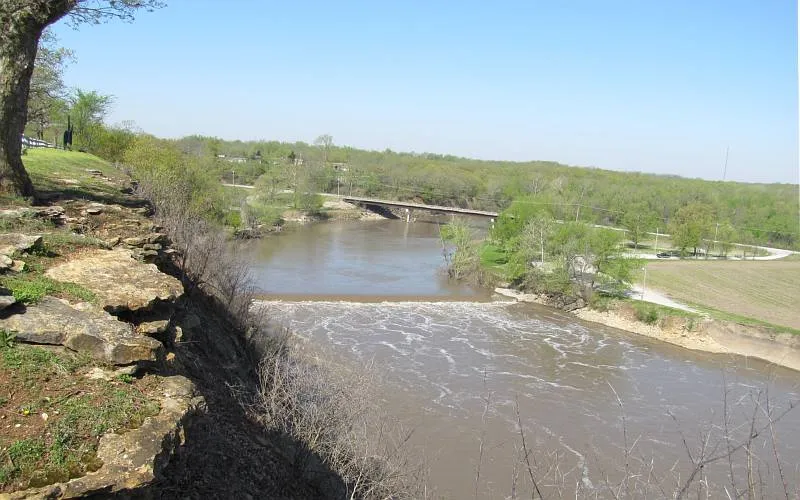 Photo: Neosho River, via kansastravel.org
Rector was not unusual. Across the expanding American frontier, federal surveyors faced an impossible task: map millions of acres of wilderness into precise rectangular grids using 18th-century technology, limited budgets, and crushing deadlines. Their solution reveals something fundamental about human nature under institutional pressure — when reality conflicts with requirements, reality loses.
The Mathematics of Convenient Truth
The Public Land Survey System, established in 1785, demanded mathematical perfection from an imperfect world. Every township must be exactly six miles square. Every section must contain precisely 640 acres. Rivers, hills, and swamps were irrelevant — the grid was sacred.
Surveyors learned quickly that truth was expensive. Actually walking every mile, measuring every angle, and accounting for the Earth's curvature could take months per township. Falsifying the data took days. They invented "witness trees" that never existed, drew rivers flowing uphill, and placed section corners in the middle of lakes. When questioned, they produced elaborate field notes describing landmarks they had never seen.
The psychology driving this systematic fraud mirrors every institutional scandal in American history. Faced with impossible standards and real consequences for failure, individuals consistently choose plausible deception over honest incompletion. The surveyors understood what modern corporate executives know instinctively — institutions reward the appearance of success over actual achievement.
When Lies Become Law
The most remarkable aspect of these fraudulent surveys was not their creation, but their permanence. Once filed in Washington, fictional boundaries became legal reality. Courts ruled that official surveys trumped physical evidence. Property deeds referenced non-existent landmarks. State boundaries followed rivers that had been drawn in the wrong places.
In 1856, Kansas farmers discovered that their "correctly surveyed" sections contained only 580 acres instead of the promised 640. Investigation revealed that their surveyor had simply estimated distances while riding horseback, adjusting his measurements to make the numbers work. The farmers sued, demanding proper surveys. The Kansas Supreme Court ruled against them. The original survey, however flawed, had legal standing. Reality would have to conform to the map.
This judicial decision established a principle that echoes through American law: institutional convenience outweighs individual accuracy. The same logic that protected fraudulent land surveys later shielded banks foreclosing on homes with fabricated paperwork, corporations claiming patents on processes they never invented, and government agencies defending programs based on manipulated statistics.
The Architecture of Acceptable Fraud
The General Land Office knew about the widespread falsification but developed an institutional blindness to it. Supervisors learned not to ask inconvenient questions. Clerks processed obviously fictional surveys without comment. The entire system operated on a shared understanding that perfect compliance was impossible, but perfect documentation was required.
This dynamic — demanding impossible standards while tacitly accepting systematic deception — appears throughout American institutional history. Modern parallels include financial institutions requiring credit scores they know are manipulated, universities demanding standardized test results they understand are coached, and corporations mandating compliance training they recognize as theater.
The surveyors' fraud succeeded because it served everyone's immediate interests. Washington got completed maps. Settlers got legal titles. Local officials got functioning townships. The only losers were abstract concepts like accuracy and truth — casualties deemed acceptable for practical progress.
The Persistence of Institutional Fiction
Today, GPS technology can measure the errors in those 19th-century surveys down to the inch. Property boundaries still follow lines drawn by men who never visited the land they claimed to map. Roads curve around section corners that exist only on paper. Farmers plant crops in fields whose legal descriptions reference trees that were never planted and stones that were never placed.
The fraudulent surveys persist because changing them would require admitting institutional failure on a massive scale. Every corrected boundary would trigger lawsuits. Every adjusted property line would cost billions in legal settlements. The fiction has become too expensive to fix, so it remains embedded in American geography like a lie told so often it becomes indistinguishable from truth.
This permanence reveals the ultimate lesson of the surveyor fraud: institutions protect their own credibility more fiercely than they pursue accuracy. Once a lie becomes legally binding, truth becomes legally irrelevant. The maps that lied continue to define American property law because acknowledging their deception would undermine faith in the entire system they created.
The laboratory of history shows us that human psychology under institutional pressure remains constant. Given impossible standards and real consequences for failure, individuals will choose plausible deception over honest incompletion. The only variable is whether institutions choose to confront that deception or make it legally binding. In America's case, we chose to make the lies permanent — and we are still living within the boundaries they created.