Standing Alone Against Progress: The Stubborn Americans Who Forced Skyscrapers to Bend Around Them
The Individual Against the Machine
In 1928, Mary Mallon owned a six-story brownstone on Fifth Avenue that stood directly in the path of what would become Rockefeller Center. The developers offered her $1.5 million — equivalent to roughly $25 million today — for property she had purchased for $90,000 just fifteen years earlier. She refused. When they doubled the offer, she refused again. When they threatened legal action, she hired lawyers. When they suggested she was being unreasonable, she reminded them that the property was hers to keep or sell as she chose.
 Photo: Rockefeller Center, via cdn-imgix.headout.com
Mallon held out for three years while the largest private development project in American history built itself around her home. She finally sold in 1931 for $3.2 million, but only after forcing the Rockefeller organization to redesign their entire complex to accommodate her refusal to be intimidated.
Her story illustrates a recurring phenomenon in American urban development: the psychology of the holdout, individuals who resist collective momentum not necessarily for profit, but for principle.
The Economics of Stubborn Individualism
The standard economic explanation for holdout behavior focuses on strategic extraction — property owners demanding premium prices by threatening to derail large projects. This rational actor model suggests that holdouts are simply maximizing their financial returns by exploiting their leverage position.
The historical record tells a more complex story. Many famous holdouts rejected offers far exceeding their property's market value, suggesting motivations beyond simple profit maximization. Edith Macefield, the Seattle woman who refused Microsoft's offers for her farmhouse in the 1980s, turned down sums that would have made her wealthy. When asked why, she said she liked her house and saw no reason to leave.
Similarly, when the Pennsylvania Railroad tried to acquire the final parcels for Penn Station in 1904, several property owners refused offers of ten times their buildings' assessed value. They were not negotiating for higher prices — they simply did not want to sell. The railroad eventually used eminent domain to complete the project, but only after years of legal battles that delayed construction and increased costs dramatically.
These cases reveal that holdout psychology often stems from attachment rather than avarice. Property owners develop emotional connections to places that cannot be quantified in financial terms. When developers treat these attachments as negotiation tactics rather than genuine feelings, they misunderstand the fundamental psychology driving resistance.
The Architecture of Accommodation
The most visible legacy of holdout psychology is architectural. Developers facing immovable property owners have three choices: abandon their projects, use legal force to acquire the land, or design around the obstacles. Each choice reveals different institutional approaches to individual resistance.
The Empire State Building exists because developers chose accommodation over confrontation. Several small property owners on the chosen site refused to sell, forcing the architects to design a building that incorporated existing structures rather than replacing them entirely. The result was a more complex but ultimately more interesting building than originally planned.
 Photo: Empire State Building, via i.pinimg.com
Similarly, the unusual shape of Boston's John Hancock Tower resulted from the developers' inability to acquire a small church that stood in their preferred footprint. Rather than fight a lengthy legal battle, they designed their skyscraper to curve around the existing building. The church still stands, dwarfed but not displaced, a monument to successful resistance against overwhelming force.
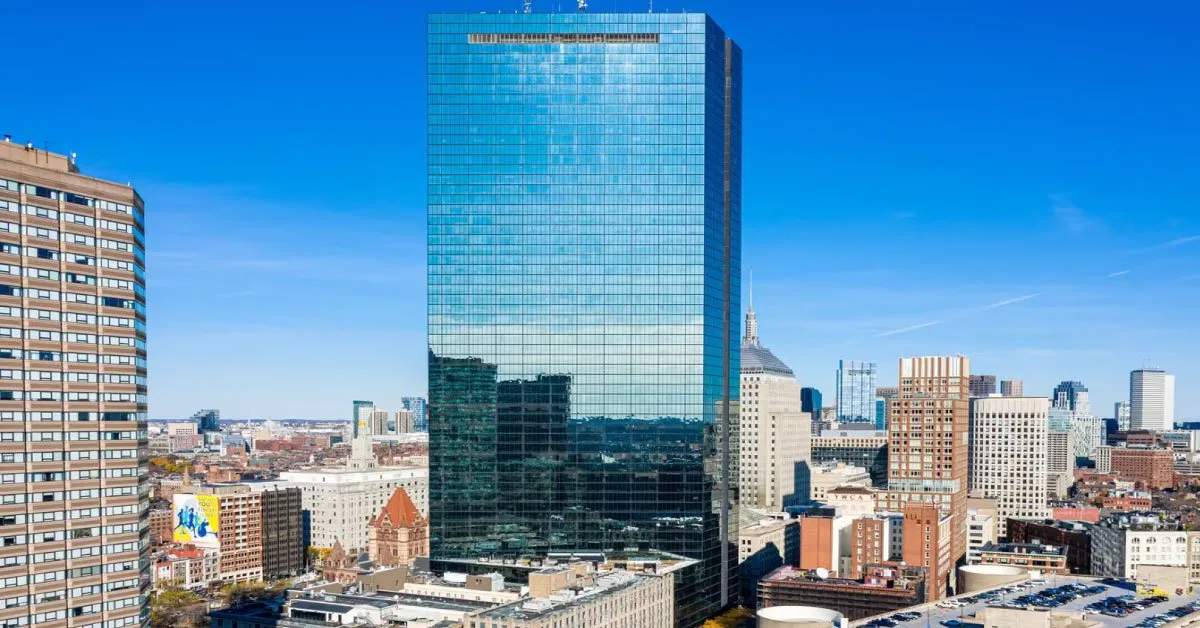 Photo: John Hancock Tower, via soloexcursion.com
These architectural accommodations represent more than aesthetic compromises — they demonstrate that individual resistance can shape collective outcomes even when the individual appears powerless. A single property owner cannot stop urban development, but they can force it to bend around them.
The Psychology of Principled Resistance
What drives individuals to resist offers they cannot refuse? Psychological research suggests that holdout behavior often stems from reactance — the human tendency to value autonomy more highly when it is threatened. The more pressure developers apply, the more valuable resistance becomes to the property owner.
This dynamic explains why many holdouts become more stubborn as offers increase. Higher offers signal greater desperation, which validates the property owner's sense that their resistance is meaningful. The money becomes less important than the principle — the right to say no to powerful institutions.
The case of Austin Corbin Jr. illustrates this psychology perfectly. In 1925, Corbin inherited a small apartment building that stood in the path of the proposed Lincoln Tunnel. The Port Authority offered him progressively larger sums to sell, eventually reaching an amount that would have made him independently wealthy. Corbin refused every offer, stating that he enjoyed frustrating government bureaucrats more than he would enjoy spending their money.
The tunnel was eventually built around Corbin's building, which required expensive engineering modifications and created traffic patterns that persist today. Corbin died in 1954, still living in his apartment, still refusing to sell. His building was finally demolished in 1987, sixty years after the first purchase offer, long after the tunnel project was complete.
The Limits of Individual Defiance
Not all holdout stories end in accommodation or victory. American law provides mechanisms for overriding individual resistance when collective interests are deemed sufficiently important. Eminent domain allows governments to force sales for public projects, while private developers can sometimes acquire holdout properties through legal pressure or economic warfare.
The most common defeat mechanism is patient attrition. Developers surround holdout properties with construction, making life increasingly unpleasant for resistant owners. Noise, dust, blocked access, and constant pressure gradually wear down even the most determined individuals. Most holdouts eventually sell not because they change their minds, but because their circumstances become unbearable.
The psychological toll of sustained resistance against overwhelming force explains why holdout behavior is relatively rare despite its dramatic visibility. Most property owners conclude that fighting large institutions is not worth the personal cost, even when they might ultimately win.
The Laboratory of Power and Resistance
The history of American holdouts reveals consistent patterns in how individuals respond to institutional pressure. When faced with overwhelming force, most people comply. A small minority resists strategically, using their leverage to extract maximum compensation. An even smaller group resists on principle, valuing autonomy over advantage.
This distribution appears constant across time and context. The same psychological types who became property holdouts in the 20th century become whistleblowers, protesters, and dissidents today. They share a common willingness to sacrifice personal comfort for abstract principles, even when their resistance appears futile.
The laboratory of urban development shows us that individual defiance can shape collective outcomes, but only under specific circumstances. The resistant individual must control something the institution needs. The institution must prefer accommodation to confrontation. The broader public must view the resistance as legitimate rather than obstructionist.
When these conditions align, a single stubborn property owner can force billion-dollar projects to bend around them. When they do not, resistance becomes merely a delay before inevitable defeat. The difference lies not in the individual's determination, but in the institutional context that either supports or crushes their defiance.
Understanding this dynamic helps explain why some acts of individual resistance reshape history while others disappear without trace. The psychology of defiance remains constant — only the circumstances change.