The Ordinance That Spoke in Omissions: How Municipal Silence Built the Segregated Suburb
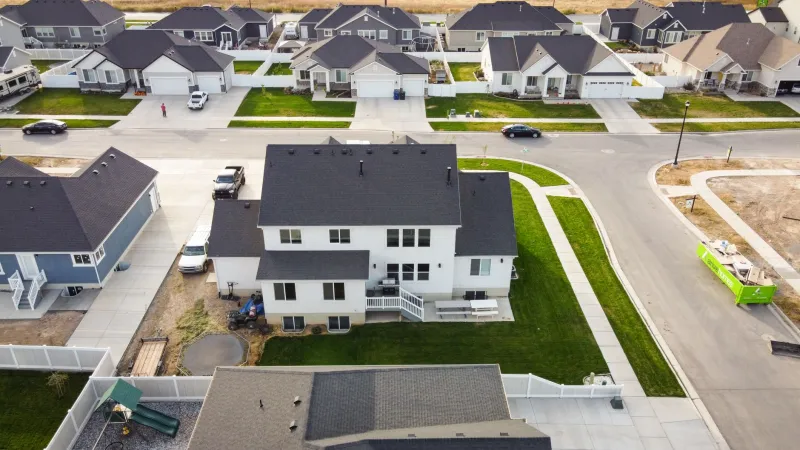
The most revealing documents in American municipal history are not the ones that say what was intended. They are the ones that say almost nothing—that enumerate permitted uses with bureaucratic precision while remaining silent on the question of who those uses were designed to serve, that establish minimum lot sizes and setback requirements without explaining why those particular numbers were chosen, that prohibit apartment construction in residential zones without acknowledging that apartments were where people without automobiles and without inherited wealth were most likely to live.
Zoning codes are technical documents. They are written in the language of land use rather than the language of social aspiration. And yet they are, read carefully and in historical context, among the most direct expressions of community psychology available to the historian—records of what a particular group of people, at a particular moment, believed they were entitled to protect themselves from.
The Invention of Plausible Neutrality
The Supreme Court's 1926 decision in Village of Euclid v. Ambler Realty established the constitutional legitimacy of zoning as a municipal power. The case involved an Ohio suburb's attempt to prevent industrial development from encroaching on residential areas, and the Court's approval of this objective was reasonable on its face. Industrial uses genuinely do create externalities—noise, pollution, traffic—that are incompatible with residential life.
But the logic of Euclid created a template that proved easily adaptable to purposes the Court had not considered. If a municipality could legitimately exclude uses that generated externalities incompatible with residential character, it could also—using precisely the same legal and rhetorical framework—exclude uses whose primary incompatibility was social rather than industrial. The apartment building generated no smoke and produced no toxic runoff. Its incompatibility with the single-family residential zone was a matter of the kind of people who lived in apartments rather than the physical characteristics of the building itself.
This distinction was rarely made explicit in the zoning codes themselves. It did not need to be. The codes specified minimum lot sizes that made single-family construction the only economically viable option, required garage parking that added tens of thousands of dollars to construction costs, and established floor-area minimums that pushed housing costs beyond the reach of lower-income households. None of these provisions named race or class. All of them achieved their intended sorting function with considerable reliability.
What the Numbers Said Without Saying
The choice of specific numerical thresholds in zoning ordinances is almost never explained in the documents themselves. A minimum lot size of 10,000 square feet appears without justification, as though the number were self-evidently appropriate rather than selected from a range of possible values that would have produced different social outcomes. A minimum dwelling unit size of 1,200 square feet is presented as a standard of habitability rather than as a price floor.
When historians examine the planning commission minutes and correspondence that accompanied the drafting of these ordinances, the justifications that do appear are revealing. The language of "community character" recurs with striking frequency—a phrase capacious enough to mean almost anything and specific enough, in context, to mean exactly one thing. Proposals for multifamily housing were regularly opposed on the grounds that they would "change the character of the neighborhood," a formulation that everyone present understood without anyone needing to specify what kind of change was being resisted.
This is a sophisticated psychological operation. The community that frames its exclusionary preferences in the language of character preservation rather than explicit discrimination accomplishes two things simultaneously. It achieves the practical objective of exclusion, and it maintains a self-image of reasonableness—of simply protecting what already exists rather than actively preventing something from arriving. The distinction between these two framings is legally and morally significant, but in terms of outcome, it is irrelevant.
Human beings are remarkably consistent, across cultures and centuries, in their preference for justifications that align their self-interest with some broader principle. The medieval guild that restricted membership to protect "quality" was engaged in the same psychological operation as the postwar suburb that restricted housing types to protect "character." The specific vocabulary changes; the underlying mechanism does not.
The Silence Around Racial Covenants
The relationship between zoning codes and racially restrictive deed covenants in the mid-twentieth century illustrates the layered nature of regulatory silence. The covenants, which explicitly prohibited the sale or rental of property to non-white buyers, were the more direct instrument—and, after the Supreme Court's 1948 ruling in Shelley v. Kraemer, the more legally vulnerable one. The Court held that judicial enforcement of restrictive covenants constituted state action and therefore violated the Equal Protection Clause.
But the zoning codes that coexisted with these covenants did not require judicial enforcement. They operated through the administrative apparatus of the municipality—through building permits, subdivision approvals, and variance decisions made by appointed boards whose deliberations were largely invisible to outside scrutiny. When the covenants became unenforceable, the zoning codes remained, and they continued to perform their sorting function through the indirect mechanism of price rather than the direct mechanism of explicit exclusion.
The silence of these codes about race was not an oversight. It was a strategic adaptation to a legal environment that had begun to scrutinize explicit racial classifications while leaving economic classifications largely intact. The ordinance that prohibited apartments was not, on its face, a racial document. Its authors knew—and the planning commission records make clear that they knew—that it would function as one. The silence was the point.
Reading the Document Against Itself
For the historian, the zoning code is most useful when read not for what it says but for what it declines to say. The absence of justification for a particular numerical threshold is itself informative. The consistent pattern by which certain types of housing are defined as incompatible with residential character—multifamily structures, manufactured homes, accessory dwelling units—without any explanation of the incompatibility reveals the assumption that the reader shares the author's social preferences and requires no further elaboration.
This is a form of coded communication, and it is a form that appears throughout the historical record wherever communities have needed to enforce social norms while maintaining a public posture of neutrality. The sundown town that posted no signs but made its expectations unmistakable through other means, the employer who maintained no written policy of discrimination but hired through social networks that reliably excluded certain applicants, the lending institution that used neighborhood maps rather than individual credit assessments to determine mortgage eligibility—all of these operated through the same logic of productive silence.
The zoning code is distinguished from these other mechanisms primarily by its persistence. The informal understanding can be disrupted by social change; the network can be penetrated by a sufficiently determined outsider; the map can be challenged in court once its methodology is exposed. But the ordinance that simply specifies a minimum lot size and a prohibited use category continues to operate regardless of whether anyone remembers why those particular specifications were chosen. It has been translated from intention into infrastructure, and infrastructure outlasts the intentions that created it.
This is the particular lesson that the history of zoning offers to anyone willing to read these documents as records of human psychology rather than merely as technical instruments. The preferences of one generation of community members, encoded in the language of land use regulation, become the physical and economic constraints within which subsequent generations make their choices—choices that feel free because no one is explicitly telling them what to do, but that are shaped, invisibly and persistently, by the silence that was written into the ordinance decades before they arrived.