The Private Government Next Door: How Homeowners Associations Inherited the Architecture of Exclusion
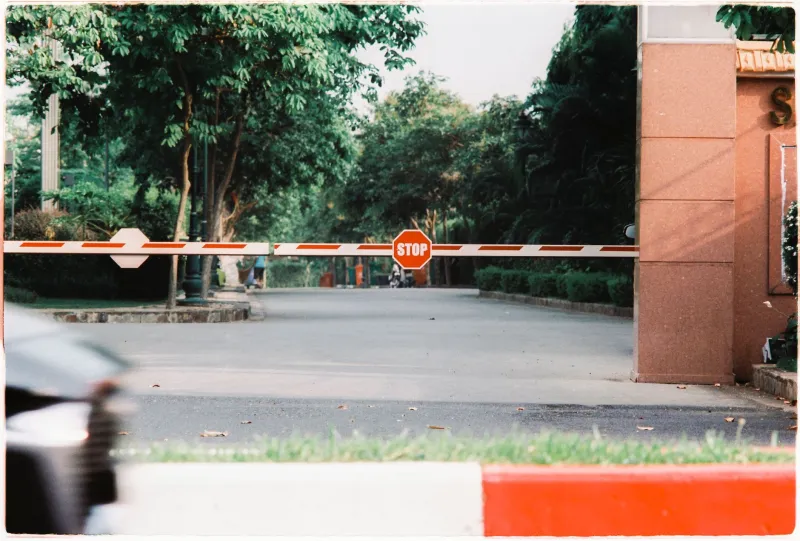
Somewhere in America this week, a homeowner received a letter informing them that their mailbox is the wrong color, their lawn ornament violates community standards, or their vehicle—parked in their own driveway—constitutes a prohibited nuisance. The letter came not from a government but from a homeowners association: a private organization with the power to fine, lien, and in some cases foreclose on the property of its members.
More than 74 million Americans now live under some form of HOA governance. Most of them joined voluntarily, in the sense that they signed documents acknowledging the association's authority when they purchased their homes. Most of them also had limited practical alternatives, since HOA-governed communities now represent the dominant form of new residential development in the United States. And most of them have only a vague understanding of how this parallel system of private government came to exist, or what it was originally designed to accomplish.
The Constitutional Problem That Created the HOA
The story begins with a 1948 Supreme Court decision. In Shelley v. Kraemer, the Court ruled that racially restrictive covenants—contractual provisions embedded in property deeds that prohibited sale to Black buyers, Jewish buyers, and members of other designated groups—could not be enforced by state courts. The decision did not make the covenants themselves illegal. It held that judicial enforcement of them constituted state action and therefore violated the Fourteenth Amendment's equal protection guarantee.
This was a significant legal distinction with enormous practical consequences. The covenants remained in the deeds. The social and economic infrastructure that had grown up around them—the networks of real estate agents, mortgage lenders, and neighborhood associations that maintained residential segregation—remained in place. What changed was the enforcement mechanism. If the courts could no longer be used to enforce exclusion, other mechanisms would need to be developed.
The homeowners association, in its modern form, was part of the answer. By vesting enforcement authority in a private organization rather than a government body, and by making membership a condition of property ownership rather than a separately contracted obligation, developers and community organizers created an enforcement mechanism that operated at one remove from the constitutional constraints that applied to state action.
The Federal Partnership
The HOA did not develop in isolation. The Federal Housing Administration, established in 1934, played a central and underappreciated role in its proliferation. The FHA's underwriting guidelines—which determined which properties and neighborhoods were eligible for federally backed mortgage insurance—explicitly favored racially homogeneous neighborhoods and penalized integrated ones. FHA-approved subdivisions were, by design, segregated subdivisions.
As the postwar suburban boom accelerated, the FHA's model documents for planned residential communities became templates that developers adopted wholesale. These documents included provisions for homeowners associations as the governance mechanism for common areas and community standards enforcement. The HOA was thus baked into the physical and legal structure of American suburbia at its moment of maximum expansion.
By the time the Fair Housing Act of 1968 made racial discrimination in housing sales and rentals illegal, the HOA had already been institutionalized as a feature of American residential development. Its racial origins were legally severed from its ongoing operations. The mechanism survived the purposes for which it had been designed.
The Grammar of Private Law
What the HOA represents, in structural terms, is a private legal system. It has the equivalent of legislation—the CC&Rs, or Covenants, Conditions, and Restrictions, that govern community standards. It has the equivalent of taxation—the mandatory assessments that fund common area maintenance and administrative operations. It has the equivalent of courts—the internal dispute resolution processes that adjudicate alleged violations. And it has enforcement powers that, while they must ultimately rely on the civil court system for their most extreme applications, are considerably more immediate and less procedurally constrained than those available to municipal governments.
What it conspicuously lacks is the constitutional framework that constrains government action. The Bill of Rights does not apply to private organizations. An HOA can prohibit political signs, restrict religious displays, and regulate speech in common areas in ways that a city government cannot. The residents who are subject to these restrictions agreed to them—or, more precisely, agreed to be bound by whatever rules the association might adopt, a considerably more open-ended commitment.
This is the historical throughline that runs from ancient Rome to colonial New England to the gated subdivisions of contemporary Phoenix: when formal governments are constrained by law, custom, or constitutional provision, private organizations fill the vacuum. And private organizations, freed from the procedural obligations that constrain governments, rarely choose to be more generous with individual rights than the law requires them to be.
The Mundane Reality and What It Conceals
It would be misleading to suggest that the typical HOA experience is one of oppression. Most HOA interactions involve landscaping schedules, parking rules, and assessments for pool maintenance. Most HOA boards are composed of neighbors who volunteered for an administrative burden they did not fully anticipate and who are trying, in good faith, to manage a shared resource.
But the mundane reality of HOA governance sits on top of a legal architecture that was not designed for mundane purposes. The powers that HOA boards exercise—to impose fines, to place liens on property, to restrict how residents use their own homes—are extraordinary powers for private organizations to hold. They were assembled deliberately, by lawyers and developers who understood exactly what they were building.
The residents who discover this architecture—usually when they receive a fine they consider unjust, or when they attempt to challenge a board decision and find that their procedural rights are far more limited than they assumed—are encountering a system that was designed to be difficult to challenge from within. The CC&Rs that govern most associations include provisions making amendment difficult, dispute resolution internal, and board authority broad.
The Persistence of the Pattern
The HOA's history is not a story about villainous individuals. The developers who built postwar subdivisions were responding to market incentives and federal guidelines. The lawyers who drafted the governing documents were doing their jobs. The homebuyers who signed the CC&Rs were trying to buy houses in a market that offered them limited alternatives.
What the history reveals is something more structural and more durable: the human tendency, observable across every period and culture in the historical record, to reconstruct through private arrangement the hierarchies and exclusions that formal law has prohibited. When the Supreme Court closed one door in 1948, the real estate industry did not abandon the goal. It found a different door.
The HOA now governs a larger share of the American residential landscape than it did at any point in its history. Its original purposes have been legally extirpated. Its institutional structure, and the habits of governance it produces, remain entirely intact. The laboratory of history does not offer many cleaner examples of how legal constraints on formal power tend to produce equivalent power in private form. The experiment is still running, in subdivisions across the country, enforced by volunteers who mostly just want the lawns to look nice.